
 ≈ 74 min
There is a trade from which every Nativity figure has come, until a form could be obtained without it — from a generator, from a library of bodies or from a file shop, as another chapter of this block examines (Form without an author)—, and it is the only one in the whole of nativity-scene art and practice whose name changes depending on who is speaking. Whoever builds the scenery is called a nativity-scene maker, and nobody disputes the word. Whoever paints the figures is the painter, or the polychromer. Whoever sells them has a shop or a stall at the fair. But whoever makes the figure exist — whoever conceives it, models it and answers for it, before anyone reproduces it— receives two names that do not mean the same thing: sculptor, or craftsman. And that one and the same operation should have two names is not a detail of vocabulary. It is the sign that the operation has not been looked at properly.
That one and the same operation should have two names is not a detail of vocabulary. It is the sign that the operation has not been looked at properly.
This chapter is about that operation. First, about what a sculptor is and how a sculptor works, in the past and today, because it cannot be taken as known: the image that almost everyone has of the sculptor — the studio, the smock, the block of marble— is an image, not a description, and nothing can be reasoned on it. Then, about what it takes to become one, and what more it takes to be one in the nativity scene. Next, about where the line between whoever conceives and whoever executes is drawn — outside the nativity scene—, a line that inside the nativity scene is erased. And finally, about the word with which each of the six languages in which this Manual is written names that trade. The point is not to claim a title, but to name a function exactly, because things that come later depend on that exactness: who answers for a work, what the law protects and what it does not, and what a client can ask for when commissioning a figure.
1. One trade, two names
It is worth starting from a fact that anyone can check, and check in more than one language, because if it held true in only one it would be a local anecdote and not a mechanism.
In Murcia, Francisco Salzillo (1707-1783) is «escultor barroco murciano» — a Murcian Baroque sculptor— for the museum that bears his name; the same museum holds the nativity scene that Salzillo made «entre 1776 y 1783» — between 1776 and 1783— for the nobleman Jesualdo Riquelme y Fontes, with figures «de unos treinta centímetros» — about 30 centimetres tall—, «modeladas en arcilla pero también las hay en madera» — modelled in clay, though there are also some in wood—, and which his disciple Roque López and his workshop finished in 1800.3 In Catalonia, Damià Campeny (Mataró, 1771 - Barcelona, 1855) is «escultor», sculptor, for the Gran Enciclopèdia Catalana: sent to Rome on a grant from the Junta de Comerç, a member of the Accademia di San Luca, a teacher and later director of sculpture at the Llotja.4 The encyclopaedia does not say that he made nativity figures; Marià Ribas and Carlos Cid say so — «se conservan varias terracotas, en general pequeñas, más o menos acabadas y ninguna policromada», several terracottas survive, generally small, more or less finished and none of them polychromed—, quoted through a local study which at the same time warns that very few figures can be attributed to him with certainty.5 In Naples, Giuseppe Sanmartino (1720-1793), the author of the Cristo velato in the Sansevero Chapel, «firmato e datato 1753», is «scultore» for the Dizionario Biografico degli Italiani, which also records, from a source of his own time, what he made for the presepe: «vaghe e naturali teste di pastori di vario carattere ed età differente ed angeli bellissimi e divotissime figure di Maria e Giuseppe» — heads of shepherds of different character and age, angels, figures of Mary and Joseph—.6 In Bavaria, Sebastian Osterrieder (1864-1932) is, for the Wien Museum, an «akademisch geschulter Bildhauer», an academically trained sculptor, who around 1900 «vermarktete seine Werke weltweit» — sold his work all over the world—, and that work was nativity figures.7 And in the Tyrol, the Neue Deutsche Biographie records Johann Giner the Elder (Thaur, 1756-1833) with a double trade that already announces the problem of this chapter: «Krippenschnitzer/Holzbildhauer», carver of nativity scenes and sculptor in wood, both at once.8
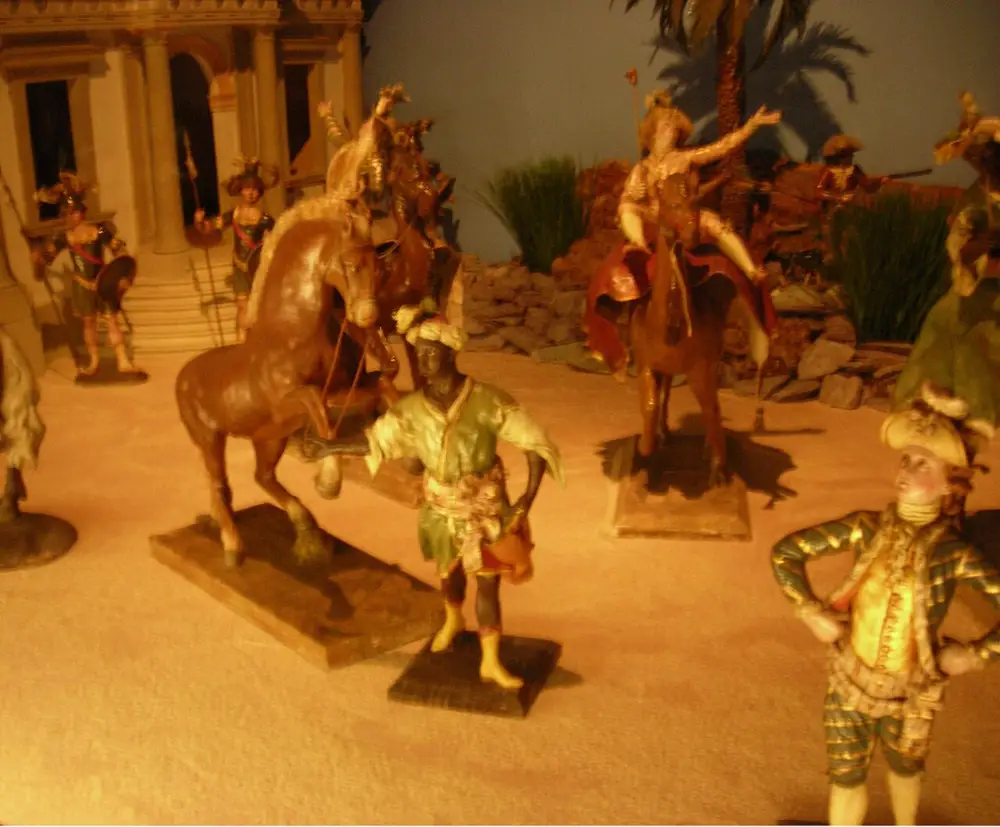
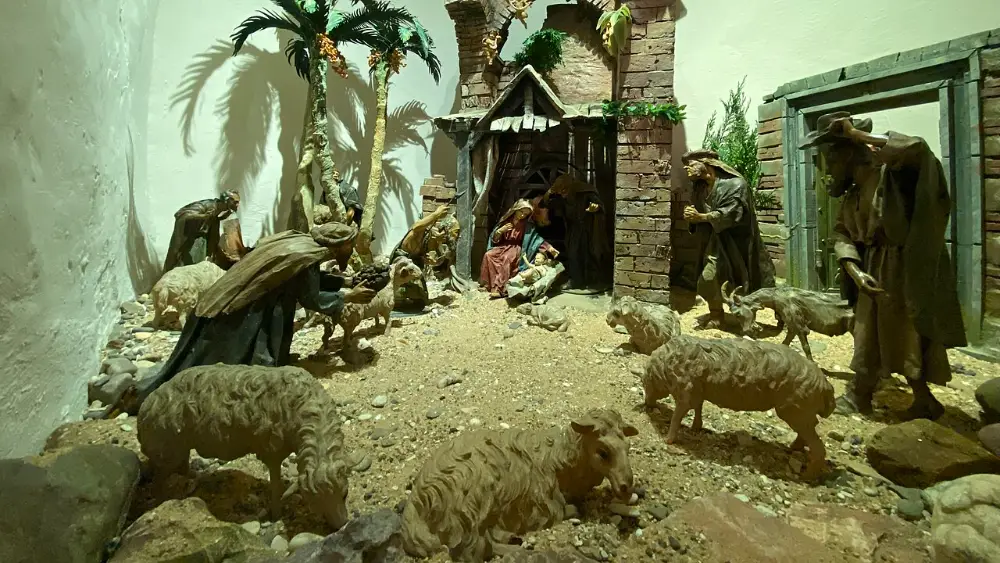
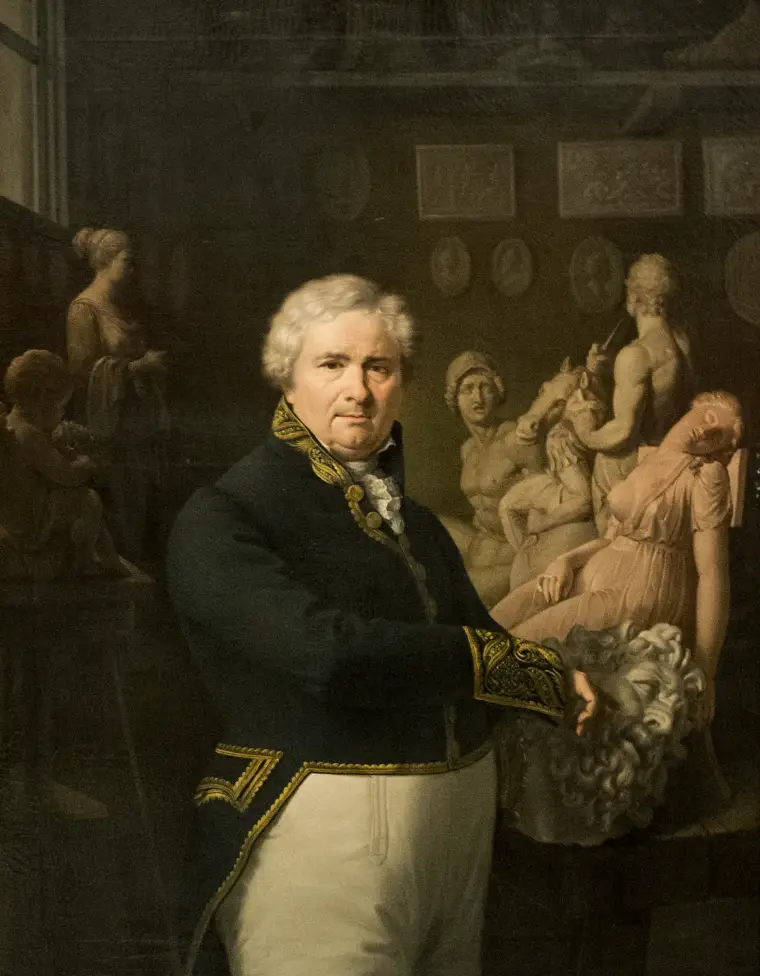
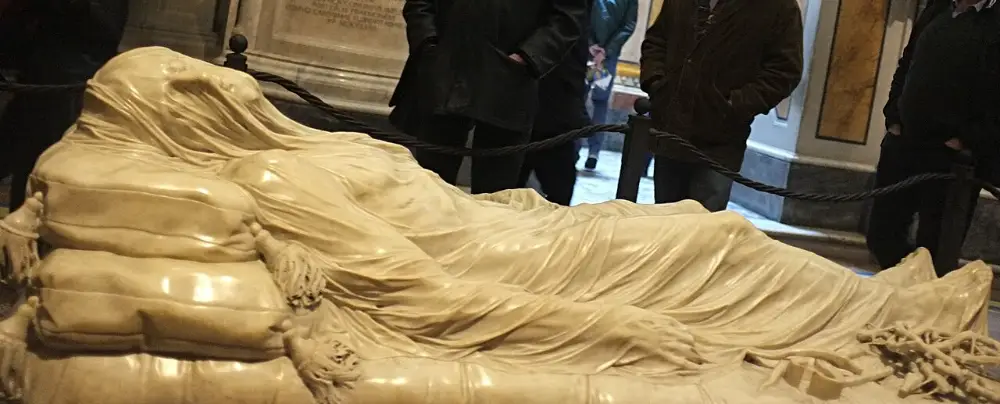
Four languages, four reference dictionaries or museums, one and the same word: sculptor. And in all four cases, the work for which they are cited includes figures for the nativity scene. The two remaining languages are in a different situation, and it has to be stated as it is. In French, the Provençal tradition names whoever makes the figures with a word of its own, santonnier, and that word, in the dictionary, says craftsman: «artisan qui fabrique des santons».9 For this chapter, no academically trained sculptor who made santons has been found recorded as such in an institutional source; the French case is examined in the section on the languages, because the mechanism is the same with the sign reversed. In English there is no case to cite: the English-speaking tradition of the nativity scene is one of collecting and of the museum rather than of the workshop — the Neapolitan crèche at the Metropolitan in New York, the one at the Carnegie in Pittsburgh, the Friends of the Crèche society—, and no English-speaking sculptor whose work includes nativity figures is known.10 Unknown, and it is left at that.
What happens next is what this chapter has to explain. In present-day Spanish-language nativity-scene practice, those same people change their name. On the online forum foro.belenismo.net, the section devoted to the figure makers of the past is titled «Índice de Artesanos Figuristas "Clásicos"» — index of “classic” craftsman figuristas—, and in it Salzillo and Campeny each have a thread of their own, alongside some fifty other names.11 It is not cited in order to argue with anyone: it is cited because it is a fact of practice, public and dated, and because it shows in a single label the two things that need to be undone. The first is that art history and the nativity-scene world give different names to the same people for the same work. The second is the word that the nativity-scene world has chosen to do so.
«Figurista» is not in the Diccionario de la lengua española. Anyone who looks it up in the Academy’s online edition is offered figurita as the nearest entry.12 What is there is figura, and precisely in the sense that matters here it names what is made: «Cuerpo de una persona o de un animal representado pictórica o escultóricamente» — the body of a person or an animal represented in painting or in sculpture—, with the synonyms escultura, estatua and talla; the following sense adds «Cosa representada pictórica o escultóricamente» — a thing represented in painting or in sculpture—.12 There is also figurero: «Persona que hace o vende figuras de barro o yeso» — a person who makes or sells figures of clay or plaster—, a word that joins into one whoever makes and whoever sells and which, as will be seen in the section on the languages, names another trade.13 The thing has a name, and it is a sculptural name. The trade that someone has derived from it does not: it is a word for internal use that nobody employs outside the nativity-scene world — and model-making—, and which in Catalan exists with a different scope. It is pointed out here once, so that the reader recognises it on meeting it, and it is not used again.
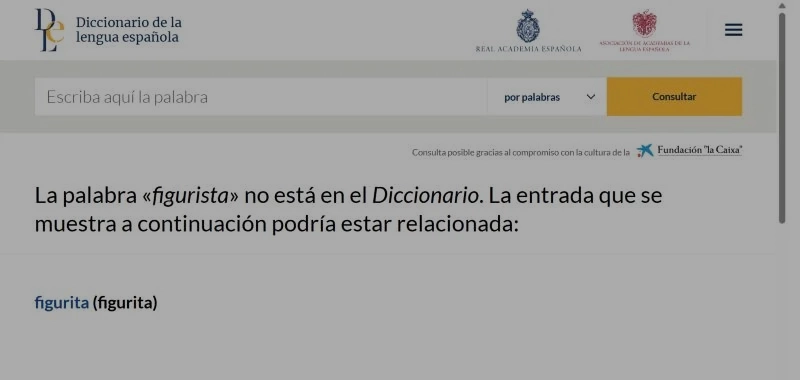
The thing has a name, and it is a sculptural name. The trade that someone has derived from it does not.
That leaves the question of why. Why a trade that has had a name for centuries is replaced, in the only field in which it is practised daily for the nativity scene, by a word that does not name it or by another, craftsman, that names something else. The answer does not lie in anyone’s bad faith, and this chapter is not going to look for it there. It lies in the fact that the operation itself — what happens between a figure not existing and existing— has never been described in the nativity-scene world with the precision with which sculpture as a discipline describes it. If the trade is not named, any name can be assigned to it.14 What follows is that description.
2. What a sculptor is and how a sculptor works
One cannot reason about a trade from its image. The sculptor’s image is old and very fixed — the man alone before the block, the chisel, the marble dust—, and it has the defect of all images: it shows a moment and hides the process. To know what a sculptor is one has to ask the discipline, and the discipline has written it down.
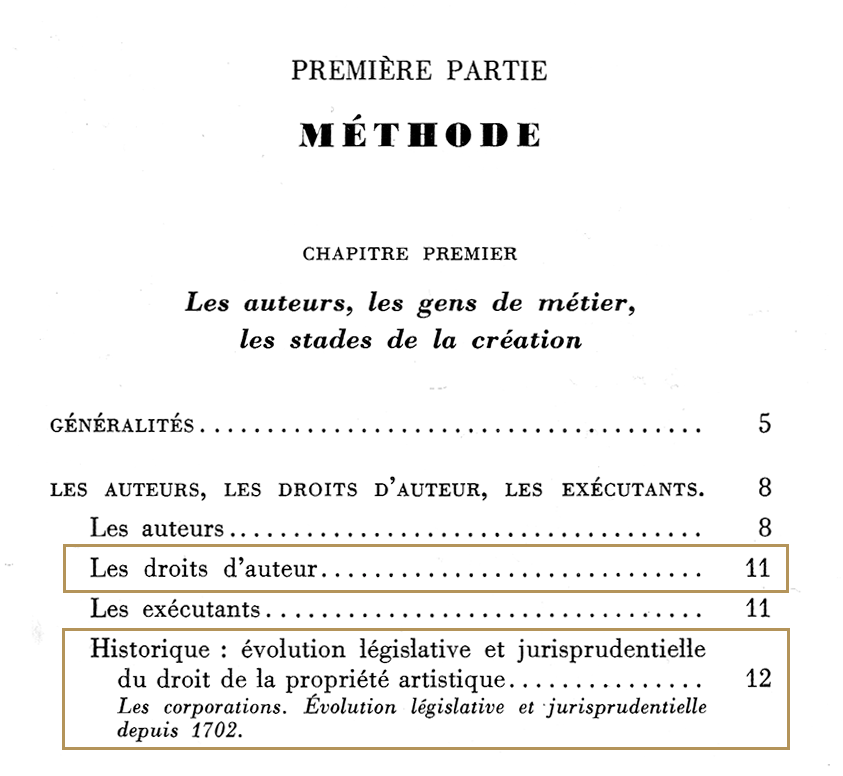
The book’s table of contents is already an argument. The first part, «Méthode», opens with the first chapter, «Les auteurs, les gens de métier, les stades de la création» — the authors, the people of the trade, the stages of creation—, and only afterwards come «Le modelage», «Le moulage», «La technique de la taille», casting.15 That is: for the discipline, before knowing how one models one has to know who models and who does not, and at what moment of the work each one stands. Within that first chapter, the first section after the general remarks is titled «Les auteurs, les droits d'auteur, les exécutants» (p. 8) — the authors, authors’ rights, the executants—, and the second, «Les stades de la création: genèse des œuvres» (p. 16), distinguishes three stages: «La conception et le travail préparatoire» — conception and preparatory work: drawings, projects, modelled sketches, maquettes and definitive models—; «L'exécution des œuvres achevées originales» — the execution of original finished works—; and «L'exécution des reproductions» — the execution of reproductions, with their edition contracts and their print runs—.15
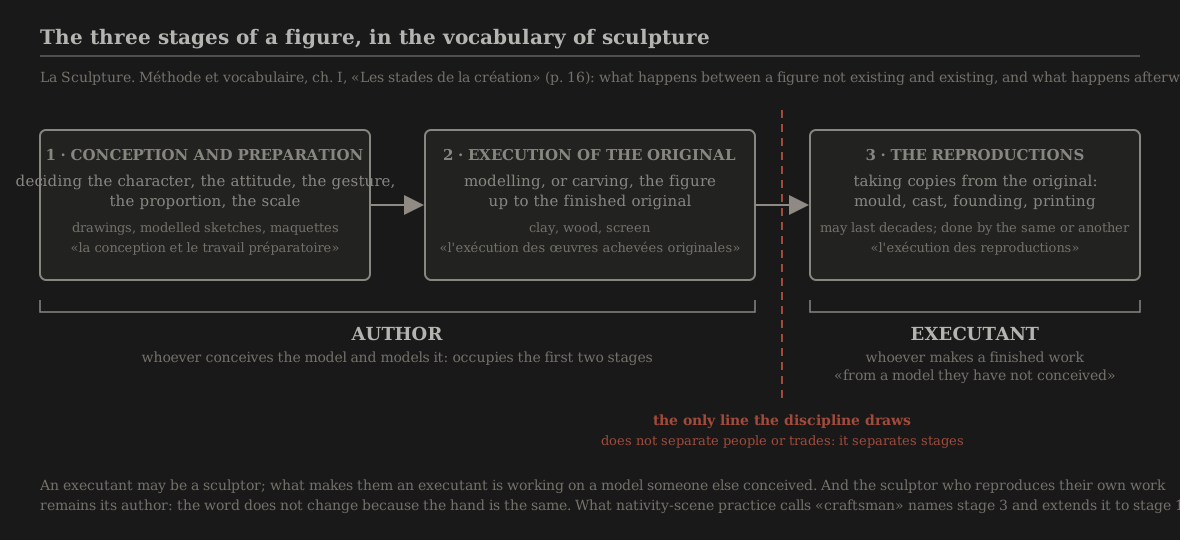
There, in three lines of a table of contents, is the description that the nativity-scene world lacks. A nativity figure goes through those three stages exactly as an equestrian statue does. There is a moment when it does not exist and someone conceives it — decides which character, what age, what attitude, what gesture, at what scale—; there is a moment when that someone models it up to the finished original; and there is a moment, which may last decades, when reproductions are taken from that original. The discipline calls whoever does the first two things the author, and whoever does the third on a model they did not conceive the executant. And it says so with a precision worth reading in full:
«Les exécutants sont des personnes — sculpteurs ou gens de métier — qui fabriquent une œuvre achevée d'après un modèle qu'elles n'ont pas conçu. Parmi eux, actuellement, seuls ceux qui travaillent sous le contrôle de l'auteur du modèle ou avec son autorisation ont une activité légalement reconnue.»16
Executants are persons — sculptors or people of the trade— who make a finished work from a model they have not conceived. Among them, at present, only those who work under the control of the author of the model or with the author’s authorisation have a legally recognised activity.
Note what it says and what it does not say. An executant may be a sculptor. What makes someone an executant is not their trade or their skill, but working on a model that someone else conceived. And conversely: what makes someone an author is not a title, nor recognition, nor the quality of what they make — «la qualité apparente d'une œuvre n'offre aucune garantie quant à son originalité», the apparent quality of a work offers no guarantee of its originality, says the same chapter two pages earlier17—, but having conceived the model. It is the same rule that this Manual set, in the chapter on the definition, for nativity-scene art and practice as a whole: the category is no guarantee of anything; practice is what counts.2
How the trade is learnt
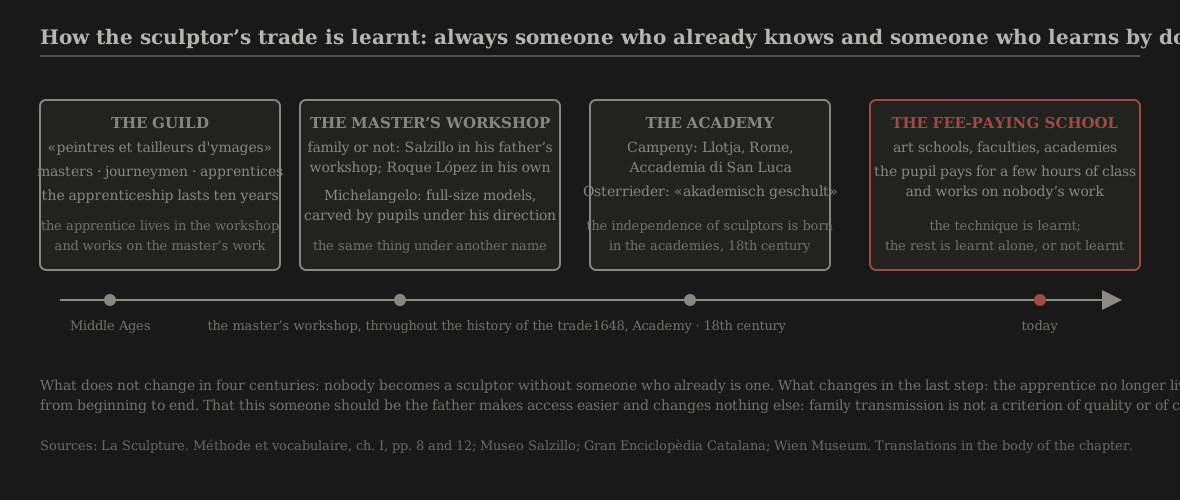
The book devotes the rest of the chapter to the history of that distinction, and that history is the history of how a sculptor has been trained. In the Middle Ages, it says, sculptors «se distinguaient encore mal des simples tailleurs de pierre» — could still hardly be told apart from mere stonecutters—, and were grouped in the community of the «peintres et tailleurs d'ymages», painters and image carvers, «qui comprenait des maîtres, des valets-ouvriers et des apprentis» — which comprised masters, journeymen and apprentices—; a note specifies that in the statutes of that community «l'apprentissage dure dix ans», apprenticeship lasts 10 years.18 The masters had «la faculté de diriger les travaux de leurs "valets-ouvriers"», and already then, and for centuries, the protection of the models they invented «s'est souvent avérée inefficace».19 The Academy of Painting and Sculpture was founded in 1648, and the notions of author and of authors’ rights were not defined «qu'au cours du XIXe siècle».19
This history matters here for one reason: the general way of learning the sculptor’s trade, throughout its history, has been the workshop of a master, with apprentices who lived in it and journeymen who executed under the master’s direction. It is not a feature of nativity-scene art nor a peculiarity of the families of nativity-figure sculptors: it is the trade. The book itself illustrates it with the greatest case — Leo X «ordonna que Michel Ange en ferait les modèles de la même grandeur que celle que devaient avoir les marbres, et ce fut sous sa conduite que ces travaux furent exécutés par des élèves», ordered that Michelangelo should make the models at the same size the marbles were to have, and under his direction that work was executed by pupils20—, and the nativity-figure sculptors cited in the previous section confirm it one by one: Salzillo «creció entre los útiles del taller de su padre» — grew up among the tools of his father’s workshop—, his father being the Neapolitan sculptor Nicolás Salzillo, and his own nativity scene was completed by «su discípulo Roque López y su taller» — his disciple Roque López and his workshop—;3 Campeny trained at the Llotja, in Rome and at the Accademia di San Luca;4 Osterrieder was «akademisch geschult», academically trained.7 Family workshop, master’s workshop, academy: three names for the same thing, someone who already knows and someone who learns by doing. That this someone should be the father makes access easier and changes nothing else. What the discipline does not record anywhere is a way of becoming a sculptor that does not pass through this. It follows that family transmission of the trade is not a criterion of anything — neither of quality nor of category—, and that is why this Manual does not treat it as one; the place where the matter is examined with names is the chapter on the heritage dossier, to which the reader is referred here.21
What it takes to be a sculptor, and what more it takes to be a nativity-scene sculptor
The age-old question — is the artist born or made?— is badly posed, and that is why it has gone unanswered for centuries: it presupposes that one of the two things is enough. Neither is enough, and the proof is within anyone’s reach. In the Western world, today, practically everyone can read and write; writers are still few. So knowledge is not the condition. Nor is aptitude: nobody can point to a writer who is one by aptitude without having written, because aptitude without work is invisible — it cannot be told apart from its absence—. What makes someone a writer is the only thing that can be seen: the work. And not a novel — nobody is a novelist for having written one—, but a body of work in the sense of a whole sustained over time, which is produced only by someone who wants to make it and goes on wanting to when nobody asks, which is most of the time. This holds for all the arts, and for sculpture all the more, because in sculpture the work has weight, takes up space and costs money to make.
Three conditions follow from this, and none can stand in for another. Aptitude gives facility. Training — the workshop of the previous section— gives technique, and without technique there is no plastic art: concept without technique remains concept. And sustained will is what turns facility and technique into work instead of leaving them as possibility. There are those who throw in the towel before making a name for themselves and being able to live from what they make; they do not thereby lose aptitude or technique, they lose the time needed, because living from the work is what makes it possible to go on making it. The third condition therefore has an economic side that should not be hidden.
And here two things that common language fuses have to be separated: wanting to be one is not declaring oneself one. It is the same rule that this Manual set for nativity-scene art and practice as a whole — practice, not title—2 and the same that La Sculpture applies to the author: the author is whoever has conceived the model, not whoever calls themselves an author.16 The will to be a sculptor is not shown by saying so; it is shown in what is left done over the years. In this way the argument ceases to be psychological and becomes verifiable: there is work, or there is not.
With those three conditions one is a sculptor. None of the three leads to the nativity scene. To be a nativity-scene sculptor — one who centres their work, wholly, partly or from time to time, on the Nativity cycle— a fourth is needed, and about that one there is indeed something to be said with sources.
Two periods should be distinguished first. Historically, the nativity figure was not the sculptor’s choice but a commission. Salzillo made his nativity scene for Jesualdo Riquelme;3 Sanmartino modelled shepherds’ heads between marble commissions.6 The subject came with the client, and the sculptor was simply a sculptor. The nativity-scene sculptor in today’s sense — one who makes nativity figures without a prior commission and sells them to collectors and scenographers they do not know— can only exist when a market of its own exists: associations, fairs, exhibitions, shops. When that kind of sculptor appears is a question with a documentable answer that this chapter does not settle; its starting point is the chronology of the word set out in the chapter of the previous block.22 What can already be stated is the mechanism: without a patron, the subject stops being a condition of the commission and becomes the sculptor’s decision.
And that decision, today, is not explained by the market. Whoever can model at small scale has within reach broader and better-paid markets than the nativity scene — the gaming miniature, the action figure, the collectible figure—. This Manual gives no numbers because the argument does not need them: it is enough that the difference exists, and anyone who has sold in both knows it.23 If a sculptor chooses the nativity scene, it is not for what it pays. Choosing it is, therefore, a fact about the sculptor, not about the trade: what one would call an inclination, an attraction to the subject, which is taught in no workshop and does not come with aptitude.
Where that inclination comes from has been studied by psychology, and it is worth saying what it says and what it does not, because none of the sources that follow speaks of art or of the nativity scene: they are cited as a general framework, and applying them here is an extension made by this Manual.
It is worth now setting out slowly what each of those three models contributes to the question of this chapter, because the reader has not read them and has no reason to.
The first, the four-phase model, answers the question «is one born with the interest?», and the answer is no: interest always begins from outside, triggered by a situation — a nativity scene seen as a child at the grandparents’ house, a figure that someone places in one’s hands—. Almost everyone has that first phase, and in almost everyone it fades. The second phase is that the situation recurs and the interest is maintained: every December, the same nativity scene. The third is that the person begins to seek it out on their own, without anyone putting it in front of them: they ask, look, try. And the fourth is that the interest is now theirs, part of how they understand themselves. The authors describe these phases in schoolchildren; applying them to nativity-scene art and practice is an extension made by this Manual, but the mechanism they describe can be recognised in any nativity-scene maker who tells how they began: they were not born with it, it was put in front of them, and only in them, and not in their brothers and sisters, did it carry on to the end.24
The second model, that of intrinsic and extrinsic motivation, answers another question: «why do they keep doing it?». There are two possible answers and they are not the same. One does something for what it produces beyond itself — money, recognition, a title—, and that is extrinsic motivation; or one does it because doing it is interesting in itself, and that is intrinsic. The authors do not say that one is better than the other, and neither does this Manual. What can be said is that when the market pays little for one subject and a lot for another, and someone chooses the one that pays little, the motivation that moves them is, by definition, of the second kind: it is not explained by what it produces beyond itself. That is exactly the situation of the sculptor who chooses the nativity scene.25
The third, the model of passion, answers the most uncomfortable question: «how does one know whether that inclination really exists, or whether someone only claims to have it?». The answer of those who have measured it in more than 900 people is that passion is defined by three things and not by declaration: that the activity is liked, that it is considered important, and that time and energy are devoted to it. The first two cannot be seen; the third can, and it is what remains in the work done. The authors add that this inclination can be integrated with the rest of life or devour it, and they do not allow one to say which of the two happens to a nativity-scene maker; nobody knows that without studying it.26
The three models lead back, each by its own path, to the same place as La Sculpture and as this Manual’s definition: what makes someone a nativity-scene sculptor is what they have made, not what they have said. And they explain why constancy, in this trade, is more like fidelity than a career: one does not choose the nativity scene for what it gives, and one stays with it because the interest, at some point, stopped coming from outside.
One last observation, only pointed to here because it has a chapter of its own. The sculptor is not the only author of the nativity scene. Whoever composes the scene is also an author — of the scene—, even when composing it with someone else’s figures; it is what La Sculpture calls a work of collaboration, in which several authors take part with rights of their own,27 and what happens in a theatre between the director and the actors. The scenographer is the author of the scene and not of the figures; the sculptor, the reverse. Their motivations also differ, and the economic one most of all: in the scenographer it is almost nil — a complete nativity scene is rarely sold—, in the sculptor it is real, because the sculptor needs to sell in order to go on making. That division is developed in the chapter on the scenographer and in the one on the client.
How the work is done today
What has changed in the workshop is not the operation but the tool. The silicone mould has replaced the plaster waste mould in reproduction; resin has joined terracotta as a material for the copy; digital modelling and three-dimensional printing make it possible to conceive and model without touching clay, and to reproduce at any scale. None of these three things moves the line that La Sculpture draws: there is still a moment when the figure does not exist and someone conceives it, and there is still, afterwards, a reproduction that the same person or someone else may make. The discipline already knew mechanical reproduction — «mise-aux-points, machine à agrandir, moulage», pointing, enlarging machine, moulding— and had already settled that this task, however exact, «ne confère aux exécutants aucuns droits d'auteur», confers no authors’ rights on the executants.28 Osterrieder, around 1900, sold nativity figures all over the world «aus Gips», in reproduced plaster, and the museum that cites him does not stop calling him a sculptor for that.7 As for what material each thing is — why the finished figure is not «de barro», of clay, but of terracotta, and why that is not a preference of vocabulary—, this Manual has already dealt with it in the chapter on the word, to which the reader is referred here.29
Something else has changed, and this does affect the operation, because it affects how the trade is learnt. The master’s workshop with apprentices who lived in it — the general form of the sculptor’s training throughout its history, described in the previous section— has practically disappeared. Its place has been taken by art schools, university faculties and academies, where the teacher does what the master did but with a difference that changes everything: the pupil is no longer an apprentice who works on the master’s work in exchange for learning, but someone who pays to receive classes, a few hours on certain days, and not the whole working day. La Sculpture dates the origin of that change: «L'indépendance des sculpteurs est une habitude née au sein des académies qui ne date guère que du XVIIIe siècle» — the independence of sculptors is a habit born within the academies that goes back hardly further than the 18th century—.43 What is seen today is the end of that line: the academy replaced the guild, and the fee-paying school has replaced the workshop. What is lost is not technique, which is taught just the same, but the part of the trade that could only be learnt by living alongside someone else’s work from beginning to end: the commission, the client, the price, the reproduction, the failure and its repair. Whoever leaves a school today can model; the rest they learn on their own, or do not learn.
The figure without a sculptor
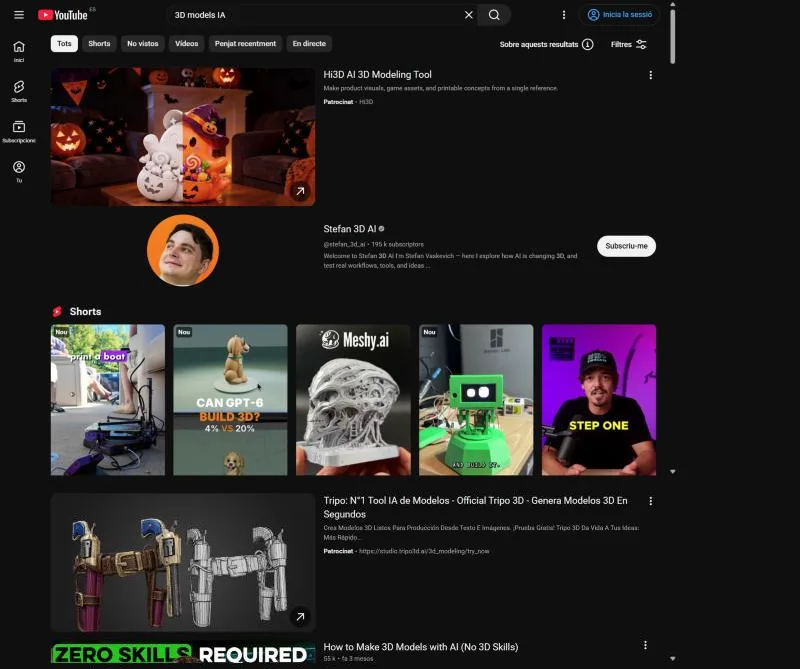
There is a third novelty that does not fit into the previous two and that this chapter has to examine, because it puts the whole distinction to the test. Today there are artificial-intelligence systems that, from a written description — a prompt—, generate a three-dimensional model in a printable format (STL, OBJ), and a three-dimensional printer turns it into a figure. A search for «3D models IA» on a video platform today returns, on its first screen, two advertisements for generators —«Hi3D AI 3D Modeling Tool» and «Tripo: N.º 1 Tool IA de Modelos: Genera Modelos 3D En Segundos»— and titles such as «How to Make 3D Models with AI (No 3D Skills)», «This AI Turns Images into 3D Models… and It's Insane» or «Microsoft Trellis 2 turns any single image into a downloadable 3D model for free».44
It is worth going through it with the vocabulary of La Sculpture, because that is what it is for. The author is whoever has conceived and modelled the original;16 the executant is a person who makes a finished work from a model they did not conceive.16 Whoever writes the prompt conceives, in the weak sense of the word: they decide they want a shepherd, old, seated, with a lamb. But they model nothing: they do not decide the pose in space, nor the proportions, nor the gesture of the hand, nor where the weight falls; the system resolves that, and resolves it on the basis of millions of other people’s models on which it has been trained. In the discipline’s preparatory work this would be, at most, a written note for the sculptor — «an old shepherd, seated»—, and a note is not a sketch. The system, for its part, is not an author, because authorship belongs to persons, nor is it an executant, because the discipline defines the executant as a person who reproduces an existing model: the system reproduces nothing, it generates. It is a tool, like the pantograph or the enlarging machine,28 with one decisive difference: those started from an original that someone had modelled, and this one produces the model without anyone having modelled it. And whoever presses the printer’s button is, in the most exact sense, an executant: they make a finished work from a model they did not conceive.
The result is a figure that has someone who asked for it and someone who printed it, and has no sculptor. It is not an author’s figure, because nobody conceived and modelled its original; nor is it a commercial-brand figure, because it has no manufacturer to answer for it.35 It is a third thing, a new one, which this Manual names by what it lacks: a figure without a sculptor. Where it is made is also revealing: not in a workshop, but on a computer and a printer, without clay, without a mould, with no trade other than writing and pressing. None of this makes it bad or good — quality is judged in the specific work2—; what it says is that, for the first time, there can be a figure without there having been a sculptor, and that the word with which the nativity-scene world names that figure matters more than ever.
Two clarifications. The first: if the person intervenes in the model — opens it in a modelling program and reworks it, corrects the pose, redoes the hand, decides the proportions—, then they do model, and to the extent that they do so they are the author of what they changed: digital modelling is modelling, and the discipline’s line recognises it without difficulty. The second: what the law says about a work generated in this way is a matter for the next chapter, which checks it law by law; suffice it to say here that the United States copyright registration office has published guidance according to which material generated by a system without human creative intervention cannot be registered.45
With this the trade has been described: conceiving, modelling the original, and reproducing it or having it reproduced; learnt in a workshop, from a father or from a master; sustained by will and, in the nativity scene, by an inclination towards the subject that the market does not explain; practised today with new tools on the same operation. The next section shows that the line between author and executant drawn by the discipline is not a peculiarity of French sculpture: international bodies, the dictionaries of neighbouring languages and art history since the 15th century all have it.
3. The distinction exists outside the nativity scene
If the line between author and executant were the invention of a French vocabulary, the nativity-scene world could ignore it. It is not. It is drawn, with different words and the same cut, in four places that have not agreed among themselves: in international cultural statistics, in the dictionary of one of the languages of this Manual, in art history, and in the practice of artists themselves when they publish editions of their work.
In cultural statistics. UNESCO’s Framework for Cultural Statistics (2009) — the framework with which member States count and classify their cultural activity— sets out the cultural domains, and one of them is called «Visual Arts and Crafts». They go together in the domain and separately in the enumeration: sculpture among the visual arts, crafts as a category of their own.30 What this allows one to say is limited and exact: the body that sets how culture is counted worldwide does not consider visual arts and crafts to be the same thing, even though it groups them together. What it does not allow is a statement of where each country places each trade; that is decided by each national statistics office, and it has not been checked here.
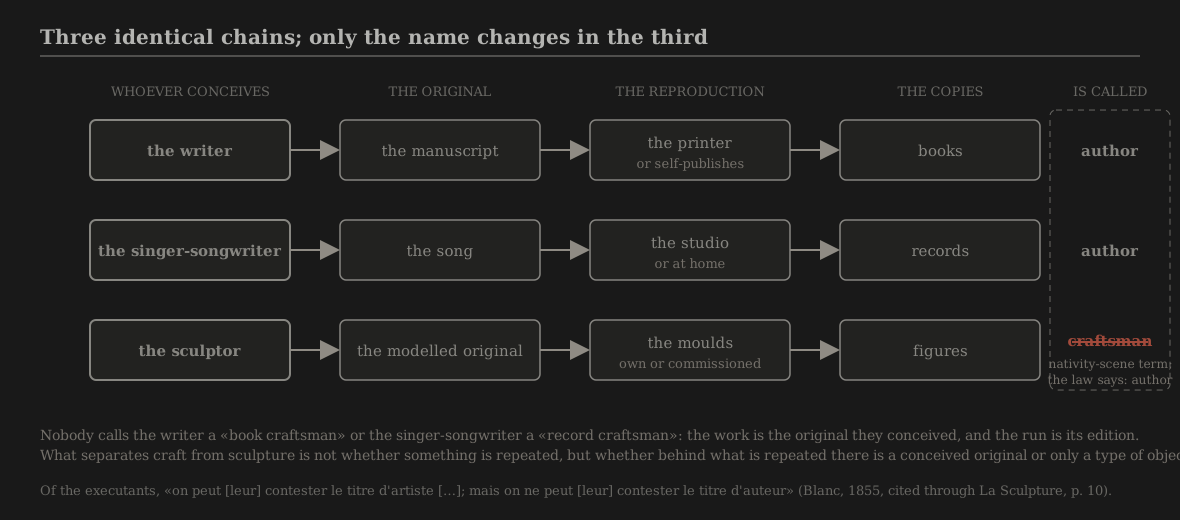
In the dictionary. The Diccionari de la llengua catalana of the Institut d'Estudis Catalans defines artesania, in its second sense, as the «producció d'obres decoratives amb pretensions artístiques fetes a mà i amb repetició de peces» (production of decorative works with artistic pretensions, made by hand and with repetition of pieces) — the repetition of pieces is part of the definition, not an addition—. Artista is «persona que practica un art, especialment una de les belles arts» (a person who practises an art, especially one of the fine arts). And when the same dictionary classifies the disciplines, sculpture appears among the arts plàstiques and the belles arts, never among the arts manuals, which are defined separately.31 That is: the official language of one of the oldest nativity-scene traditions in Europe makes in its dictionary, without anyone having asked it to, the distinction that the nativity-scene world does not make. And it makes it by a criterion worth reading carefully: not material or size, but the repetition of pieces — which is the craftsman’s way of producing, the maker of espadrilles or baskets, none of which is anyone’s original—. What the dictionary does not say, and must be added so that the definition does not turn against art, is that the repetition of an original is not craft: a numbered Goya print, a sculpture published in an edition, a figure reproduced from a mould are editions of a work conceived by someone, and remain the work of their author. What separates craft from sculpture is not whether something is repeated, but whether behind what is repeated there is a conceived original or only a type of object.
In art history. For centuries, sculptors, painters and builders were tradespeople: in the medieval classification of knowledge, painting and sculpture were mechanical arts — those done with the hands—, not liberal arts, and they were learnt in the guild, not in the academy; this is what La Sculpture documents for France with its «tailleurs d'ymages» and its 10-year apprenticeship,18 and what this Manual has already recounted in two places, which are not repeated here. In the chapter on popular or artistic nativity scenes it was shown, with Paul Oskar Kristeller as the source, that this classification changed in the Renaissance, when painters and sculptors claimed not to be craftsmen, and that the border between art and craft is therefore not a natural fact but a convention with a history.32 And in the chapter on Quattrocento perspective that border can be seen moving as it happens: by grounding themselves in measurable and demonstrable principles — Brunelleschi’s perspective, systematised by Alberti in De pictura (1435)—, painting, sculpture and architecture ceased to be regarded as manual trades and claimed the standing of applied sciences, and the artist ceased to be merely an executor and presented himself as someone who conceives and demonstrates.32 What matters here is the consequence: calling Salzillo, Campeny or Sanmartino craftsmen is not a choice of nativity-scene vocabulary; it is denying them a promotion that art history granted them centuries ago and that no internal jargon can revoke.
In the practice of artists. The most frequent objection is reproduction: if a hundred copies are taken from a figure, is it still sculpture? Artists themselves have long had the answer. A print by Goya, Rembrandt or Picasso exists in dozens or hundreds of impressions and nobody calls their authors «craftsman printers»; the work is the original they conceived, and the print run is its edition. In sculpture the same happens: Jaume Plensa 61 is an edition of 2,998 copies numbered and signed by the artist, who does not intervene in the production of each one, and the work is recognised as art and not as craft or industrial production.33 The key is not whose hands move in each copy: it is the authorship of the original and the intention that brought it into existence. And the discipline had already said so in 1855, in a sentence that separates the two words the nativity-scene world confuses: of the executants, «on peut [leur] contester le titre d'artiste, cela importe peu à la solution de la question; mais on ne peut [leur] contester le titre d'auteur» — one may dispute their title of artist, it matters little to the question; what cannot be disputed is their title of author—.34 Artist is a judgement; author is a fact. This Manual does not dispute the first — quality is judged in the specific work, not in the category2— and keeps to the second.
Artist is a judgement; author is a fact.
A comparison with other arts makes it evident. The writer writes the original manuscript and sends it to a printer, or self-publishes; produces books; remains an author, and nobody calls the writer a book craftsman. The singer-songwriter composes the song, records it in a studio or at home, produces copies of the record; remains an author, and nobody calls the singer-songwriter a record craftsman. The sculptor models the original, makes or commissions the moulds, produces copies of the figure; remains an author. And in the nativity scene, the sculptor is called a craftsman. The three chains are identical; only the name changes in the third. The question of why has its home in the chapter on the heritage dossier, where the law that has fixed that name in Spain is examined.21
4. What the sculptor does, and what the sculptor does not do
With the operation described and the line drawn, it remains to look at the real workshop, because there the line does not separate people but tasks, and one and the same person can be on both sides on the same day.
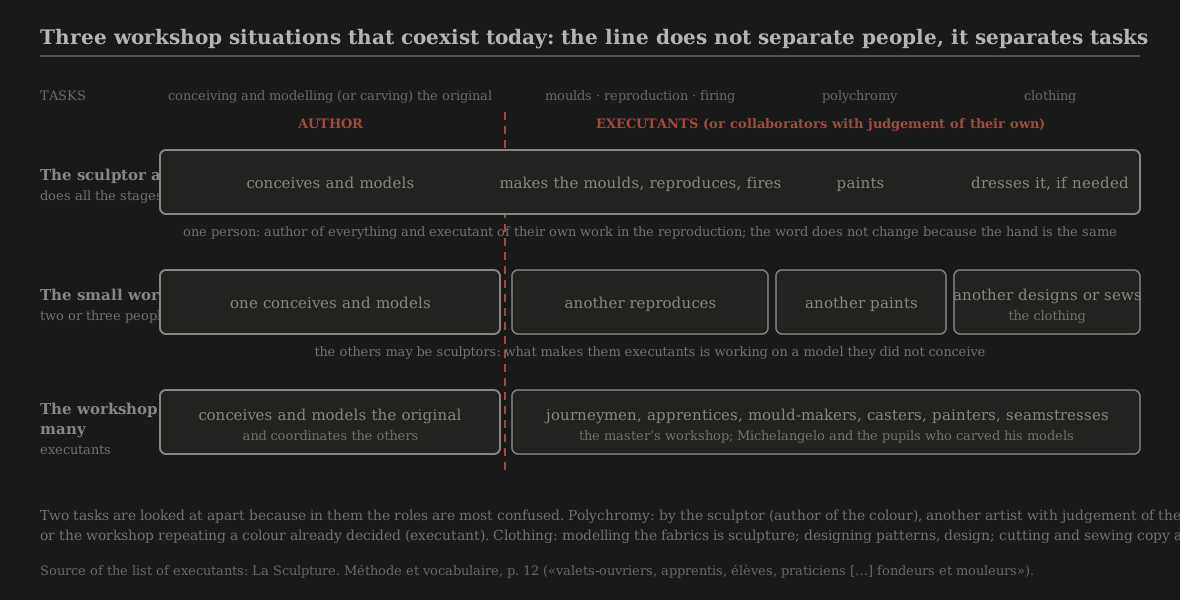
La Sculpture lists the executants who have accompanied the author of models throughout history: «des valets-ouvriers, des apprentis, des élèves, des praticiens et des ouvriers appartenant à des corps de métier distincts, tels les fondeurs et les mouleurs» — journeymen, apprentices, pupils, pointers and workers belonging to distinct trades, such as founders and mould-makers—.28 In the nativity-figure workshop the list is the same with other names, and it falls into three situations that coexist today:
- The sculptor alone, who does all the stages: conceives, models, makes the moulds, reproduces, fires, paints and, if the figure calls for it, dresses it. The sculptor is the author of everything and the executant of their own work in the reproduction stages; the word does not change just because the hand is the same.
- The small workshop, of two or three people, family or not, where each has a task: one models, another makes moulds and reproduces, another paints, another designs or sews the clothing. The author is whoever conceives and models, or carves; the others are executants, with the precision that La Sculpture adds and that matters here: they may be sculptors, and what makes them executants is working on a model they did not conceive.16
- The workshop of many executants, where the sculptor conceives and models, or carves, the original and coordinates the work of the others. It is the model of the master’s workshop of section two, and that of Michelangelo with his full-size models for the pupils to carve.20
Two tasks deserve to be looked at separately, because in the nativity scene the figure is delivered not modelled but finished, and the finishing is where the roles are most confused.
Polychromy. The sculptor may do it, and is then the author of both the modelling and the colour. Another artist may do it, bringing their own pictorial judgement to a figure they did not conceive: that artist is a collaborator, and their part may carry authorship of its own. Or executants in the workshop may do it, repeating on each copy a colour already decided: they are executants in the exact sense of the discipline. A polychromed nativity figure is often the work of two hands, and saying whose each thing is diminishes nobody. It is what cinema does in its credits, and it is worth understanding why that list is so long: it is not there out of courtesy. Each person who has taken part in the film is named, first, because it is fair — each person’s work is acknowledged under their name—, and then because the law requires it: intellectual property law grants the author the right to have their authorship acknowledged, and for the audiovisual work it expressly names who its authors are.46 It is the same thing that obliges a food product to carry the list of ingredients: it is not optional information, it is what lets one know what is inside.46 A nativity figure carries no label, but whoever sells it knows who modelled it and who painted it, and saying so is the same as what cinema does: naming each person for what is theirs.
Clothing. When the figure is dressed, there are three tasks that are not the same. Modelling the fabrics — giving shape, cut and fall to a treated fabric, directly on the figure— is a sculptural task, and it is done by the sculptor or by a collaborator with judgement of their own. Designing the clothing — the patterns adapted to the scale and to the character— is a design task, the sculptor’s or a collaborator’s. And cutting and sewing to a pattern already made, copy after copy, is execution. The three may coincide in one person or be divided among three; the division does not change what each task is.
All this holds equally for the popular and for the biblical nativity scene: the figure of a Judean shepherd and that of a Madrid water-carrier pass through the same hands and the same roles; what changes is the research that precedes the modelling, not the operation. And it also holds for what is not an author’s figure: commercial-brand figures, which have a manufacturer and not an author, are placed in the chapter on the world and are not repeated here.35 Who the reproducers, the polychromers and the dressers are, by the name of their trade, and what place they hold in nativity-scene art and practice in their own right, is the subject of the chapter on the remaining roles; here it was enough to see them from the sculptor’s side.
5. How each language names it
The chapter on the word, in the previous block, compared how each language names the practice as a whole — belenismo, pessebrisme, presepismo and the languages that have no word for it—.22 Here something else is compared: how each language names whoever makes the figures. And the result is different and more uncomfortable: none of the six languages has, for this trade, a word that coincides with sculptor. Each has filled the gap in its own way, and the ways reveal the mechanism. What follows is deliberately limited to what can be checked in the reference dictionary of each language and to one sentence on its law; the law as a whole is examined in the next chapter.
Spanish. The word in use is artesano belenista, established at fairs, in associations and in publications; escultor belenista exists and is used less. The dictionary has figurero, «persona que hace o vende figuras de barro o yeso» — a person who makes or sells figures of clay or plaster—, which does not distinguish between making and selling, reduces the trade to two materials and says nothing about authorship;13 it does not have figurista.12 The Ley de Propiedad Intelectual recognises as author whoever creates an original work, without requiring a title or registration.36 And the Real Decreto 481/2022, which declared belenismo a representative manifestation of the intangible cultural heritage, speaks of «el arte de fabricar las figuras del Belén a través de sus artesanos» — the art of making the figures of the nativity scene through its craftsmen—: the official word is artesano, and that is the subject of the chapter on the dossier.21
Catalan (Catalonia and Andorra). The word in use is figurista, which in Catalan does exist: the Gran diccionari de la llengua catalana defines it as «persona que fa figures de pessebre o altres» (a person who makes nativity figures or others) — the same word for three different trades, the one who conceives, the one who reproduces and the one who paints—.37 Escultor de figures de pessebre is also used and, in commercial contexts, artesà pessebrista. The normative dictionary of the Institut d'Estudis Catalans, as has been seen, places sculpture among the fine arts and defines craft by repetition.31 The law is the Spanish one.
French. The word is santonnier, from the Provençal santoun, «little saint», belonging to the tradition of Provence — Marseille, Aubagne, Arles—, and the dictionary defines it as «artisan qui fabrique des santons».9 It is the clearest case of a language that names the trade after the work and classifies it from the outset as craft; and at the same time, France has the sculpture vocabulary that draws the author/executant distinction more precisely than any other, and the law that has applied it since 1909.16 The two things coexist without touching: the santonnier is a craftsman by name and may be an author by law.
German. The ordinary word is Krippenfigurenmacher, literally «maker of nativity figures», which does not distinguish between whoever conceives and whoever reproduces. But the national biographical dictionary, when it records a sculptor of nativity figures, does not use that word: it calls Giner «Krippenschnitzer/Holzbildhauer»8 and the museum that studies Osterrieder calls him «Bildhauer» and «Krippenkünstler», sculptor and nativity-scene artist.7 The German language also distinguishes Handwerker — craftsman— from Künstler — artist—, and the copyright law (Urheberrechtsgesetz) protects the original model as a work regardless of its size or its function.39
Italian. The words in use are figuraio — in Tuscany, whoever made terracotta figures— and artigiano del presepe in Naples, where the tradition is older and richer; neither of the two distinguishes between conceiving and reproducing.40 And yet, when the national biographical dictionary speaks of Sanmartino, it calls him neither artigiano nor figuraio: it calls him scultore, and records his shepherds’ heads in the same entry as the Cristo velato.6 Italian law protects the original work in the Codice dei beni culturali e del paesaggio and in the copyright law.41
English. There is no word for the trade, because there is no trade: the English-speaking tradition receives nativity scenes made elsewhere, collects them and exhibits them. What there is, is a way of naming what is received, and it is significant: Friends of the Crèche, the society of collectors in the United States and Canada, describes itself as dedicated to «the artistry, display, and traditions of the Christmas Nativity».10 Where there is no trade to name, the word that appears is artistry, not craft. Federal copyright law protects the authorship of the original work.42
| Language | Word in use for the trade | What the reference dictionary says of it | How the national dictionary or museum names a sculptor of nativity figures |
|---|---|---|---|
| Spanish | artesano belenista / escultor belenista | figurero: «hace o vende figuras de barro o yeso»; figurista does not exist | Salzillo: «escultor barroco murciano» |
| Catalan | figurista / escultor de figures de pessebre | figurista: «persona que fa figures de pessebre o altres» | Campeny: «escultor» |
| French | santonnier | «artisan qui fabrique des santons» | — |
| German | Krippenfigurenmacher | — | Giner: «Krippenschnitzer/Holzbildhauer»; Osterrieder: «Bildhauer», «Krippenkünstler» |
| Italian | figuraio / artigiano del presepe | — | Sanmartino: «scultore» |
| English | (no word; occasionally nativity artist) | — | — (Unknown) |
What the table shows can be said in one sentence: in the languages that have a word for the trade, the word says craftsman or says nothing; and in all of them, when a reference institution has to name a particular one, it says sculptor. The ordinary word and the institution’s word do not coincide in any of the six. What travels from one language to another is not the word: it is the gap.
What travels from one language to another is not the word: it is the gap.
6. Closing
The sculptor of nativity figures is a sculptor. Not because this Manual says so, but because the discipline that describes sculpture defines the sculptor by what the sculptor does — conceiving and modelling, or carving, an original— and not by what is done with it afterwards; because the dictionaries of the languages of this Manual, when they define craft, define it by repetition, and the original is not repeated; and because the reference institutions of four countries, when they have to name one by first name and surname, call him a sculptor. What the nativity-scene world has done is something else: to name the operation after one of its stages — reproduction, which is the one that is seen at the fair— and to extend that name to the stage that is not seen, the one that happens before, when the figure does not yet exist.
The sculptor of nativity figures is a sculptor.
Naming well is neither a whim nor a recognition being requested: it is the condition for what comes afterwards to make sense. That the author of a figure has rights, and which ones, is the next chapter. That the figure is a work with destinies of its own, and not merely a component of a scene, is the one after. That the client who commissions a figure knows what is being commissioned and from whom comes later. And that the other roles in nativity-scene art and practice — whoever reproduces, whoever paints, whoever dresses, whoever composes the scene, whoever collects, whoever popularises— each have their own name and place is what closes the block. None of those chapters holds up if the first link is not named.
References
Chapter on the world, What it covers: «A world around a theme», section «The people»: the chain from whoever makes to whoever looks, with Howard Becker’s notion of the art world. ↩
Chapter on the definition, The definition: «Making the Nativity present so as to move»: «practice, not title»; the category is no guarantee. ↩ ↩ ↩ ↩ ↩
Museo Salzillo, Murcia, «Biografía de Francisco Salzillo» (museosalzillo.es/museo/francisco-salzillo/biografia/) and «Belén de Salzillo» (museosalzillo.es/coleccion/belen-salzillo/), consulted on 20-IX-2026. Literal wording: «escultor barroco murciano»; «hijo del italiano Nicolás»; «El niño creció entre los útiles del taller de su padre»; nativity scene «realizado por Salzillo entre 1776 y 1783» for «el noble murciano Jesualdo Riquelme y Fontes», «completado por su discípulo Roque López y su taller. Quedaría concluido en 1800»; figures «de unos treinta centímetros», «modeladas en arcilla pero también las hay en madera, con lienzos y telas encoladas». The total number of figures is not given in the record. ↩ ↩ ↩
Gran Enciclopèdia Catalana, «Damià Campeny i Estany» (enciclopedia.cat), consulted on 20-IX-2026: «escultor»; Rome 1797, on a grant from the Junta de Comerç; «ingressà a l'Accademia di San Luca»; teacher and director of the sculpture section of the Llotja (1819). ↩ ↩
Marià Ribas and Carlos Cid, quoted through Grup Pessebrista de Sitges, «Escultors i artesans: 2. Damià Campeny i Estrany» (pessebristesdesitges.wordpress.com, 29-V-2021), which reproduces from Cid «se conservan varias terracotas, en general pequeñas, más o menos acabadas y ninguna policromada» and warns: «Són molt poques les figures de pessebre que es coneixen i que es poden atribuir a Damià Campeny». Cid’s work has not been consulted directly; what is stated here is what that local study reproduces. ↩
Alessandro D'Alfonso, «Sanmartino, Giuseppe», Dizionario Biografico degli Italiani, vol. 90 (2017), Treccani (treccani.it), consulted on 20-IX-2026 and 18-X-2026: «scultore»; Cristo velato, «firmato e datato 1753». The quotation on the shepherds’ heads —«nel formar vaghe e naturali teste di pastori di vario carattere ed età differente»— is from Pietro Napoli Signorelli (1811, p. 272), reproduced in the DBI entry, which adds that, in the absence of documents and signatures, the nativity figures are attributed to him on grounds of style alone. ↩ ↩ ↩
Thomas Schindler, «Krippenfiguren des Sebastian Osterrieder in der Otto Wagner Kirche», Wien Museum Magazin (magazin.wienmuseum.at), 19-XII-2025, consulted on 20-IX-2026: «akademisch geschulter Bildhauer»; «Münchner Krippenkünstler»; «Krippenfiguren aus Gips, die so ausdrucksstark wirken, als wären sie aus Holz geschnitzt»; «um 1900 seine Werke weltweit vermarktete». Translations are the Manual’s own. ↩ ↩ ↩ ↩
Josef Ringler, «Gin(n)er (Güner), Johann der Ältere», Neue Deutsche Biographie 6 (1964), p. 403 (deutsche-biographie.de), consulted on 20-IX-2026: trade «Krippenschnitzer/Holzbildhauer»; «Seine Weihnachtskrippen, deren ausdrucksvolle und beseelte Figuren in ihrer anmutigen Haltung und ruhigen Erscheinung bereits die Stilmerkmale des Klassizismus aufweisen». ↩ ↩
Dico en ligne Le Robert, santonnier, santonnière, nom: «Artisan qui fabrique des santons» (dictionnaire.lerobert.com/definition/santonnier), consulted on 18-X-2026. The online Larousse gives «En Provence, fabricant de santons» (larousse.fr, same date). ↩ ↩
Metropolitan Museum of Art, «Christmas Tree and Neapolitan Baroque Crèche» (metmuseum.org): figures «Gift of Loretta Hines Howard, 1964»; Carnegie Museum of Art, «Neapolitan Presepio» (carnegieart.org): «Handmade by artists in the Royal Court of Naples between 1700 and 1830», displayed every Christmas «since 1957»; Friends of the Crèche (friendsofthecreche.org): «A society of collectors and enthusiasts dedicated to the artistry, display, and traditions of the Christmas Nativity», with a directory of permanent exhibitions «in the USA and Canada». Consulted on 18-X-2026. ↩ ↩
foro.belenismo.net, subforum «Índice de Artesanos Figuristas "Clásicos"» (forum-view.asp?fid=65), consulted on 20-IX-2026: 59 threads, among them «Francisco SALZILLO ( Murcia)» and «Damià Campeny i Estrany». ↩
Diccionario de la lengua española, dle.rae.es, figura, senses 3 and 4, and search for figurista (nearest entry offered: figurita). Checked on 21-VIII-2026, 20-IX-2026 and 19-X-2026. ↩ ↩ ↩
Diccionario de la lengua española, dle.rae.es, figurero, ra, sense 2, 23rd ed. (© RAE 2024), checked on 20-IX-2026. ↩ ↩
Formulation by Emili Solé, 21-VIII-2026. ↩
Marie-Thérèse Baudry, with the collaboration of Dominique Bozo, La Sculpture. Méthode et vocabulaire, Inventaire général des monuments et des richesses artistiques de la France, series Principes d'analyse scientifique, Paris, Imprimerie nationale, 1978, reissued in 2000 (Ministère de la Culture, «Principes d'analyse scientifique», culture.gouv.fr, consulted on 18-X-2026: «Réd. Marie-Thérèse Baudry. Paris : Imprimerie nationale, 1978, rééd. 2000. 765 p.»); current edition by Éditions du Patrimoine, series Vocabulaires, 792 pp., ISBN 9782858224593 (monuments-nationaux.fr, consulted on 20-IX-2026). Table of contents checked against Emili Solé’s copy (scan of 20-IX-2026): «Première partie. Méthode. Chapitre premier. Les auteurs, les gens de métier, les stades de la création: Généralités (5); Les auteurs, les droits d'auteur, les exécutants (8); Les stades de la création: genèse des œuvres (16); La conception et le travail préparatoire (16); L'exécution des œuvres achevées originales (35); L'exécution des reproductions (38). Chapitre II. Le modelage (55)». Translations in the body of the text are the Manual’s own. ↩ ↩ ↩
Ibid., p. 11, section «Les exécutants». And p. 10: «depuis 1909, la loi reconnaît uniquement comme auteur les sculpteurs qui ont conçu et composé des modèles originaux et les ont reproduits ou fait reproduire par des tiers». ↩ ↩ ↩ ↩ ↩ ↩
Ibid., p. 8: «Pour conclure il convient de souligner que la qualité apparente d'une œuvre n'offre aucune garantie quant à son originalité». ↩
Ibid., p. 12, section «Les corporations», and note 27 (De Lespinasse, Les Métiers et corporations…, p. 187: «l'apprentissage dure dix ans»). ↩ ↩
Ibid., p. 12, note 22 (Jay, Recueil de lettres…, p. 114). ↩ ↩
Chapter on the dossier, The dossier: «The Real Decreto 481/2022: the declaration that demotes what it declares»: the RD 481/2022 and its technical report; section 3 on family transmission; section 4 on invention and reproduction (clog/espadrille versus a new figure; the 1916 quotation and Louis Nizer). ↩ ↩ ↩
Chapter on the word, The word: «Belenismo, in two languages»: the 1864-1934 series and the languages that do not have the word. ↩ ↩
Direct knowledge of the person who signs this Manual, a professional sculptor since 1984, of the markets for small-scale figures (gaming miniature, action figure, collectible figure) compared with the market for nativity figures. No numbers, because the argument does not depend on them. ↩
Suzanne Hidi and K. Ann Renninger, «The Four-Phase Model of Interest Development», Educational Psychologist, 41 (2), 2006, pp. 111-127 (doi 10.1207/s15326985ep4102_4). Abstract checked on 20-IX-2026 (ERIC EJ736298): «The model describes 4 phases in the development and deepening of learner interest: triggered situational interest, maintained situational interest, emerging (less-developed) individual interest, and well-developed individual interest». ↩ ↩
Richard M. Ryan and Edward L. Deci, «Intrinsic and Extrinsic Motivations: Classic Definitions and New Directions», Contemporary Educational Psychology, 25, 2000, pp. 54-67. Checked on 20-IX-2026 against the PDF at selfdeterminationtheory.org: intrinsic motivation, p. 54, «doing something because it is inherently interesting or enjoyable»; extrinsic, p. 60, «doing something because it leads to a separable outcome». ↩ ↩
Robert J. Vallerand, Céline Blanchard, Geneviève A. Mageau, Richard Koestner, Catherine F. Ratelle, Maude Léonard, Marylène Gagné and Josée Marsolais, «Les passions de l'âme: On Obsessive and Harmonious Passion», Journal of Personality and Social Psychology, 85 (4), 2003, pp. 756-767 (doi 10.1037/0022-3514.85.4.756; pagination according to the Crossref record, 18-X-2026). Abstract checked on 20-IX-2026: «a strong inclination toward an activity that people like, that they find important, and in which they invest time and energy». ↩ ↩
Baudry / Bozo, La Sculpture, p. 11: «L'œuvre de collaboration, qui suppose pour sa réalisation le concours direct de plusieurs artistes (peintres, sculpteurs ou sculpteurs seulement) ayant des droits d'auteur égaux, se distingue de l'œuvre collective telle que la conçoit la législation récente». Applying it to the nativity scene is an extension made by this Manual. ↩
Ibid., p. 12: «Les auteurs de modèles, maîtres ou artistes de renom, ont souvent fait appel à des exécutants […]. La tâche qui consiste à reproduire avec une grande exactitude un modèle original au moyen de différents procédés techniques ou mécaniques (mise-aux-points, machine à agrandir, moulage) ne confère aux exécutants aucuns droits d'auteur». ↩ ↩ ↩
Chapter on the word, The word: «Belenismo, in two languages», section «Clarity, not jargon»: barro, arcilla, pasta cerámica and terracota. ↩
UNESCO Institute for Statistics, 2009 UNESCO Framework for Cultural Statistics, Montreal, 2009, section 2.5, «Defining “cultural domains”»: domain «C: Visual Arts and Crafts», which includes «Fine arts such as paintings, drawings, sculpture; Crafts; and Photography». PDF at uis.unesco.org, consulted on 18-X-2026. ↩
Institut d'Estudis Catalans, Diccionari de la llengua catalana (DIEC2), dlc.iec.cat: entries artesà/artesana, artesania (sense 2: «producció d'obres decoratives amb pretensions artístiques fetes a mà i amb repetició de peces»), artesanat, artista («persona que practica un art, especialment una de les belles arts»), art (2.6 arts manuals, 2.9 arts plàstiques, 2.10 belles arts). Consulted on 18-X-2026. ↩ ↩
Home of the argument: Popular or artistic nativity scenes? The story of a half-finished reading, section on the status of the trades, with Paul Oskar Kristeller, «The Modern System of the Arts: A Study in the History of Aesthetics», Journal of the History of Ideas, part I, vol. 12, no. 4 (1951), pp. 496 ff., and part II, vol. 13, no. 1 (1952), pp. 17 ff. (Crossref records, 18-X-2026). The border is seen moving in Perspective becomes science, with Alberti, De pictura (1435), and, for the Florentine workshop system, Richard A. Goldthwaite, The Building of Renaissance Florence (1980) and Michael Baxandall, Painting and Experience in Fifteenth-Century Italy (1972). Here it is only recapitulated. ↩ ↩
Jaume Plensa 61, Artika (Editorial Planeta): «A numbered edition, signed by the artist and limited to 2,998 copies», a sculpture-case of moulded rigid polyurethane holding two volumes (artikabooks.com, consulted on 18-X-2026). The analogy with Goya, Rembrandt and Picasso as printmakers is the Manual’s. ↩
Baudry / Bozo, La Sculpture, p. 10, quoting Blanc, Traité de la contrefaçon…, p. 298 (note 15): «On peut [leur] contester le titre d'artiste, cela importe peu à la solution de la question; mais on ne peut [leur] contester le titre d'auteur, en ce sens au moins que nul ne pourra usurper [leur] travail». Quoted through La Sculpture; Blanc’s book has not been seen. ↩
Chapter on the world, What it covers: «A world around a theme», section «The work, on two levels»: author’s figures, commercial-brand figures, automata. ↩ ↩
Real Decreto Legislativo 1/1996, de 12 de abril, consolidated text of the Ley de Propiedad Intelectual (BOE-A-1996-8930). Cited here only for its general principle; articles and literal wording in the chapter on the author and the law. ↩
Gran diccionari de la llengua catalana, Enciclopèdia Catalana, figurista (diccionari.cat/GDLC/figurista), sense 3, m. i f.: «Persona que fa figures de pessebre o altres». Consulted on 18-X-2026. This is the GDLC, not the DIEC2. ↩
Gesetz über Urheberrecht und verwandte Schutzrechte (UrhG), gesetze-im-internet.de/urhg/. Cited for its general principle; articles in the chapter on the author and the law. ↩
figuràio, s. m.: «artigiano che fabbrica figurine, specialmente per il presepio», Dizionario Italiano Olivetti (dizionario-italiano.it), consulted on 18-X-2026. Treccani’s Vocabolario does not record figuraio; it records figurinàio: «Chi va in giro vendendo figurine d'alabastro, di gesso, ecc.: i f. lucchesi; anche l'artigiano che le modella» (treccani.it, same date). ↩
Codice dei beni culturali e del paesaggio (d.lgs. 42/2004) and Legge 22 aprile 1941, n. 633, sul diritto d'autore. Cited for their general principle; articles in the chapter on the author and the law. ↩
Copyright Act of 1976, 17 U.S.C. Cited for its general principle; articles in the chapter on the author and the law. ↩
Baudry / Bozo, La Sculpture, p. 12, section «Les corporations». The observation on present-day schools is by the person who signs this Manual. ↩
Search for «3D models IA» on YouTube, 19-X-2026, without signing in, screenshot: first screen of results with two advertisements —Hi3D («Make product visuals, game assets, and printable concepts from a single reference») and Tripo («Crea Modelos 3D Listos Para Producción Desde Texto E Imágenes»)—, the channel «Stefan 3D AI» (195 k subscribers), short videos («This AI Turns Images into 3D Models… and It's Insane», 81 k views; «Microsoft Trellis 2 turns any single image into a downloadable 3D model for free»; one bearing the Meshy brand) and, as the first video, «How to Make 3D Models with AI (No 3D Skills)» (Youri van Hofwegen, 55 k views). Results change with the day and the account: they hold for that date. ↩
United States Copyright Office, Copyright Registration Guidance: Works Containing Material Generated by Artificial Intelligence, Federal Register, vol. 88, 16-III-2023, p. 16190: «If a work's traditional elements of authorship were produced by a machine, the work lacks human authorship and the Office will not register it»; and the report Copyright and Artificial Intelligence, Part 2: Copyrightability, January 2025. The literal texts, with their checking and what the laws of the six countries say, in Author and law: «What the law recognises, and to whom». ↩
Ley de Propiedad Intelectual (RDL 1/1996), art. 14.3: the author’s right to «exigir el reconocimiento de su condición de autor de la obra»; art. 87: «Son autores de la obra audiovisual […]: 1. El director-realizador. 2. Los autores del argumento, la adaptación y los del guión o los diálogos. 3. Los autores de las composiciones musicales, con o sin letra, creadas especialmente para esta obra». Consolidated BOE text (BOE-A-1996-8930), latest update published on 30-III-2022; checked on 18-X-2026. List of ingredients: Regulation (EU) No 1169/2011, art. 9.1 b) («la lista de ingredientes» among the mandatory particulars) and art. 18 («Lista de ingredientes»); EUR-Lex (CELEX 32011R1169), consulted on 18-X-2026. ↩ ↩