Researching nativity-scene art and practice

Giving form to figures and scenes.

In Emili Solé’s work, research is not a preliminary formality: it is the first gesture of the sculptor and of the set designer. Before the clay is touched or a landscape is built, there is a way of looking that compares sources, works out how many days a journey took and decides what must exist in the scene, and why. The Manual of Nativity-Scene Art and Practice gathers that work and reasons it through; at the Nativity Figure Sculpture Studio it takes shape in figures and in the collections they belong to. Two sides of a single craft.

Introductory video on Emili Solé’s sculptural work.

Work

Three collections of nativity figures

A biblical Nativity set in the 1st century, a Madrid popular nativity scene in the age of Galdós, and a set of Catalan popular figures. Every figure has its own page, with what had to be looked at before it was created.

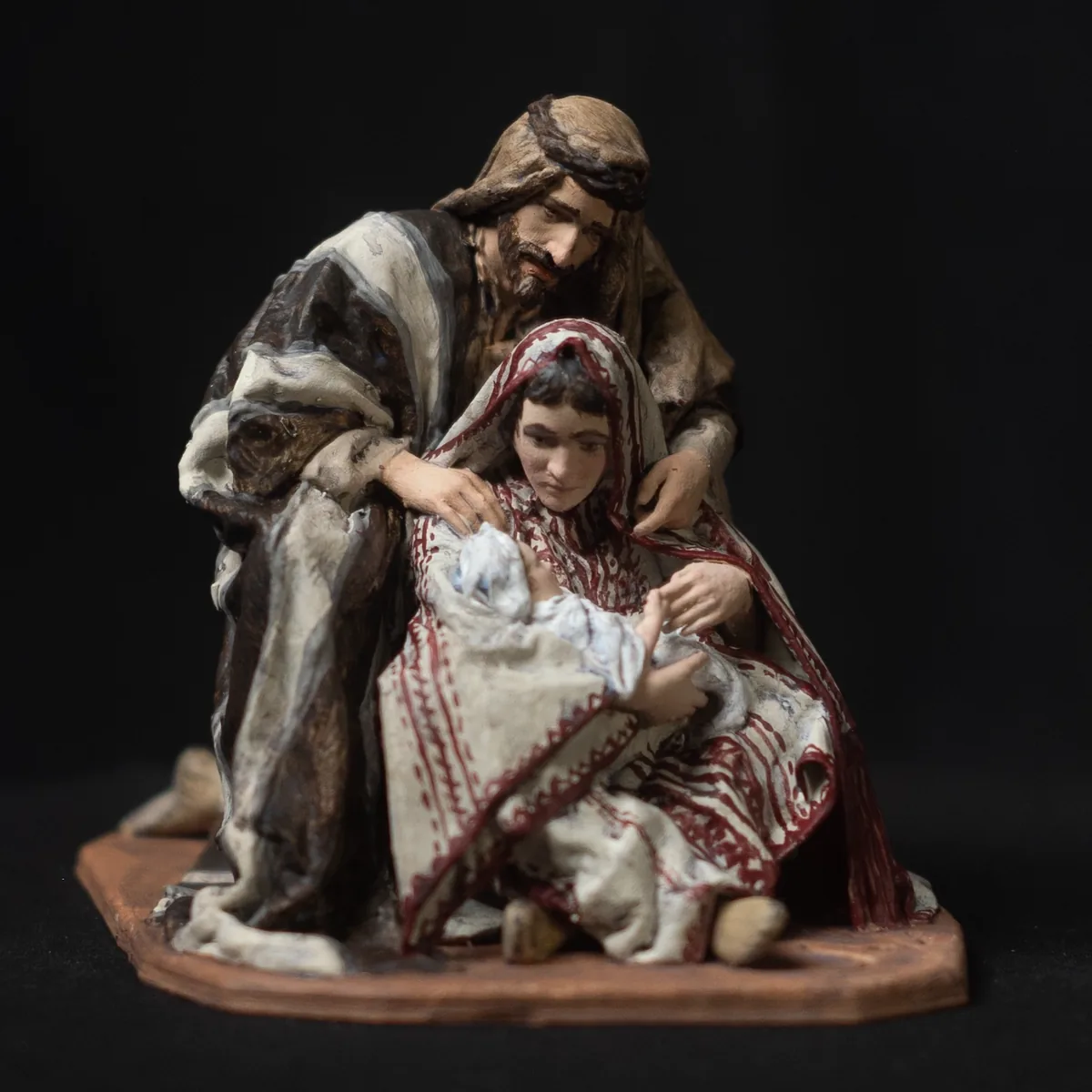
Nativity of the Biblical Nativity collection: Joseph, standing and leaning forward, covers with his cloak the seated Mary, who holds the Child in her arms.
Nativity of the Biblical Nativity collection, modelled in 3D by Emili Solé.

Collection in progress

Biblical Nativity

Nazareth, Bethlehem and Jerusalem in the first third of the 1st century: what people wore, what houses they lived in, what they lit them with. The research is in the Manual; the figures are in this collection.

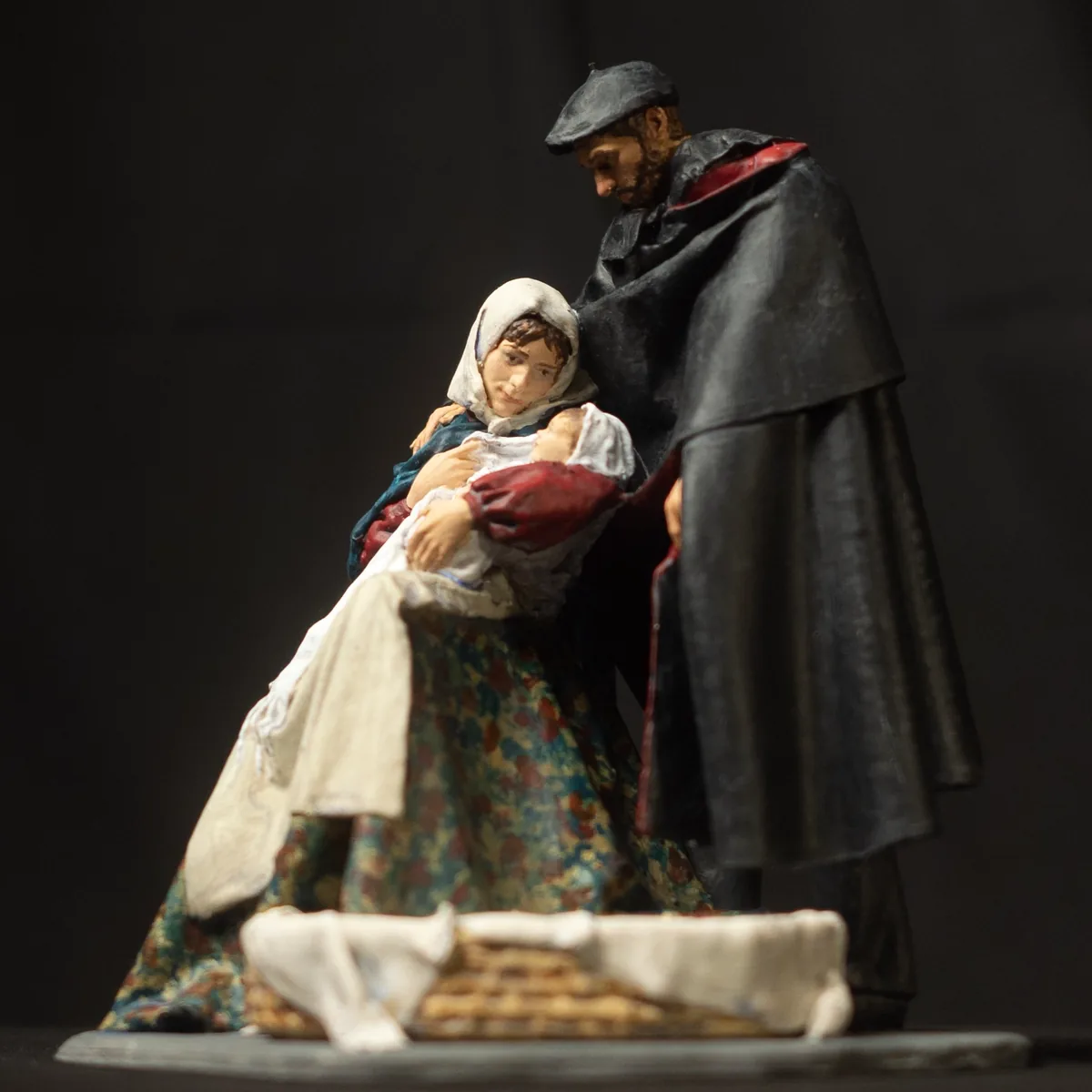
Nativity of the Madrid Popular Nativity Scene: Joseph, in cape and cap, standing beside Mary, who holds the Child over a basket.
Nativity of the Madrid Popular Nativity Scene, modelled in 3D by Emili Solé.

Collection in progress

Madrid Popular Nativity Scene

The Madrid of the turn of the century, the Madrid of Galdós: the water-seller, the night watchman, the people of the street, each with a document, an engraving or a photograph behind them.

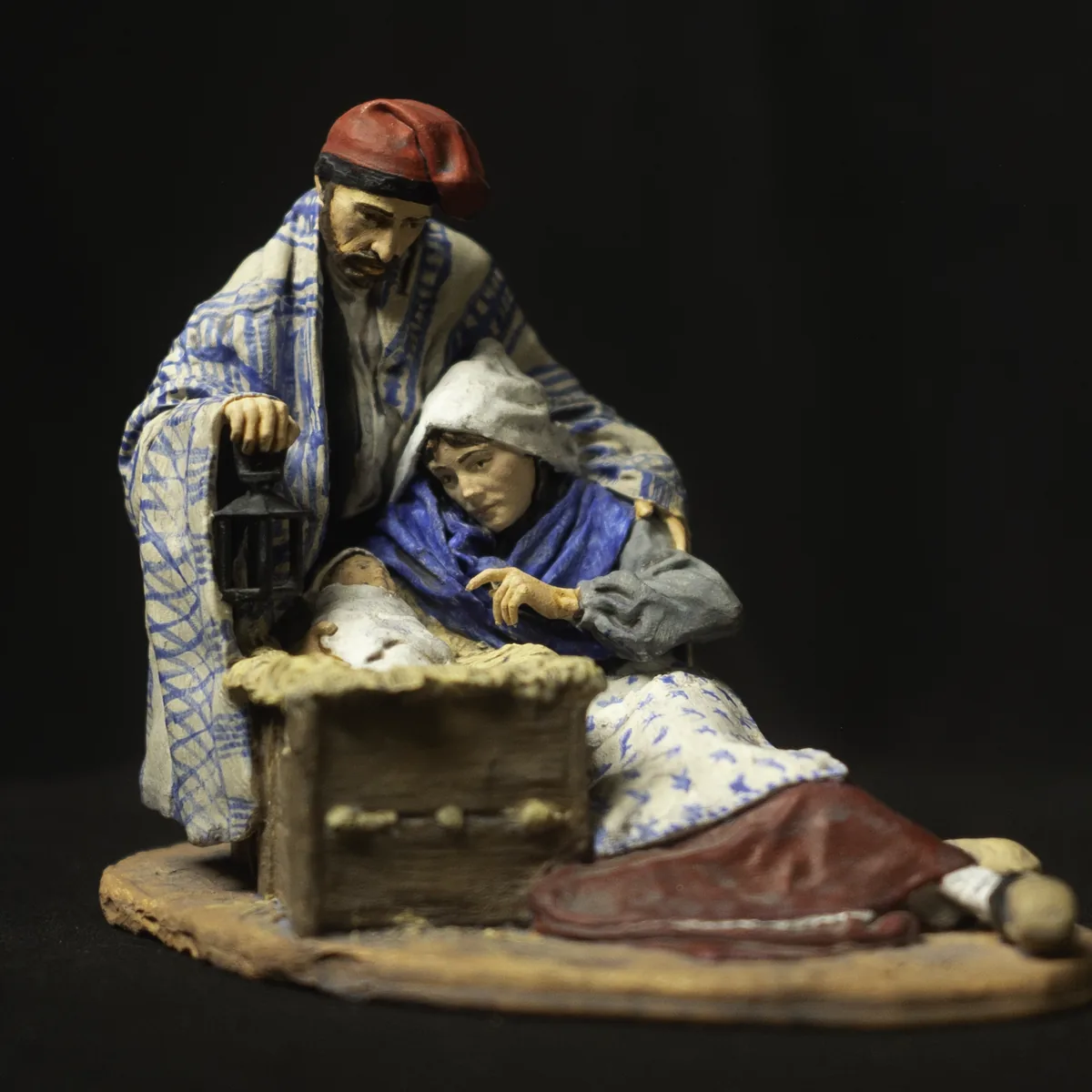
Nativity of the Catalan popular figures: Joseph, in a barretina and holding a lantern, standing beside Mary, who watches over the Child lying in a wooden manger.
Nativity of the Catalan popular figures, modelled in 3D by Emili Solé.

Collection in progress

Catalan popular figures

The characters of the Catalan pessebre, in part those recorded by Joan Amades, with what had to be looked at so that each one would be who he is.

See the collections

Manual of Nativity-Scene Art and Practice

Thinking about the nativity scene

The Manual arises from the need to examine what we do when we create a scene, choose a figure, interpret a tradition or seek unity, presence and truth in a nativity scene.

It is written where sculpture meets the art, practice and cultural tradition of nativity scenes. It is addressed to sculptors, nativity-scene makers and people who create, observe or study the nativity scene.

It does not prescribe fixed recipes, but neither does it leave the reader without guidance. It compares sources, reasons through the different options and organises them so that every decision can be understood and justified.

It approaches the nativity scene as cultural tradition, visual language, scenic construction, work of art and memory. Documentation, comparison of sources and the distinction between what is proven, reasoned and unknown run throughout the Manual.

Explore the Manual View the map of the Manual

01

The world of nativity-scene art and practice

It studies its definitions, language, bibliography, cultural development, associations and federations, and the debates that help define this field.

Explore this path

02

The art of composing nativity scenes

It examines the initial motivation and intention, composition, scenography, perspective, the relationship between figures and space, and the decisions that give a scene unity and meaning.

Explore this path

03

The Nativity cycle: scenes and characters

It studies the scenes and characters of the Nativity through iconography, iconology, historical sources, clothing, material culture and artistic references.

Explore this path
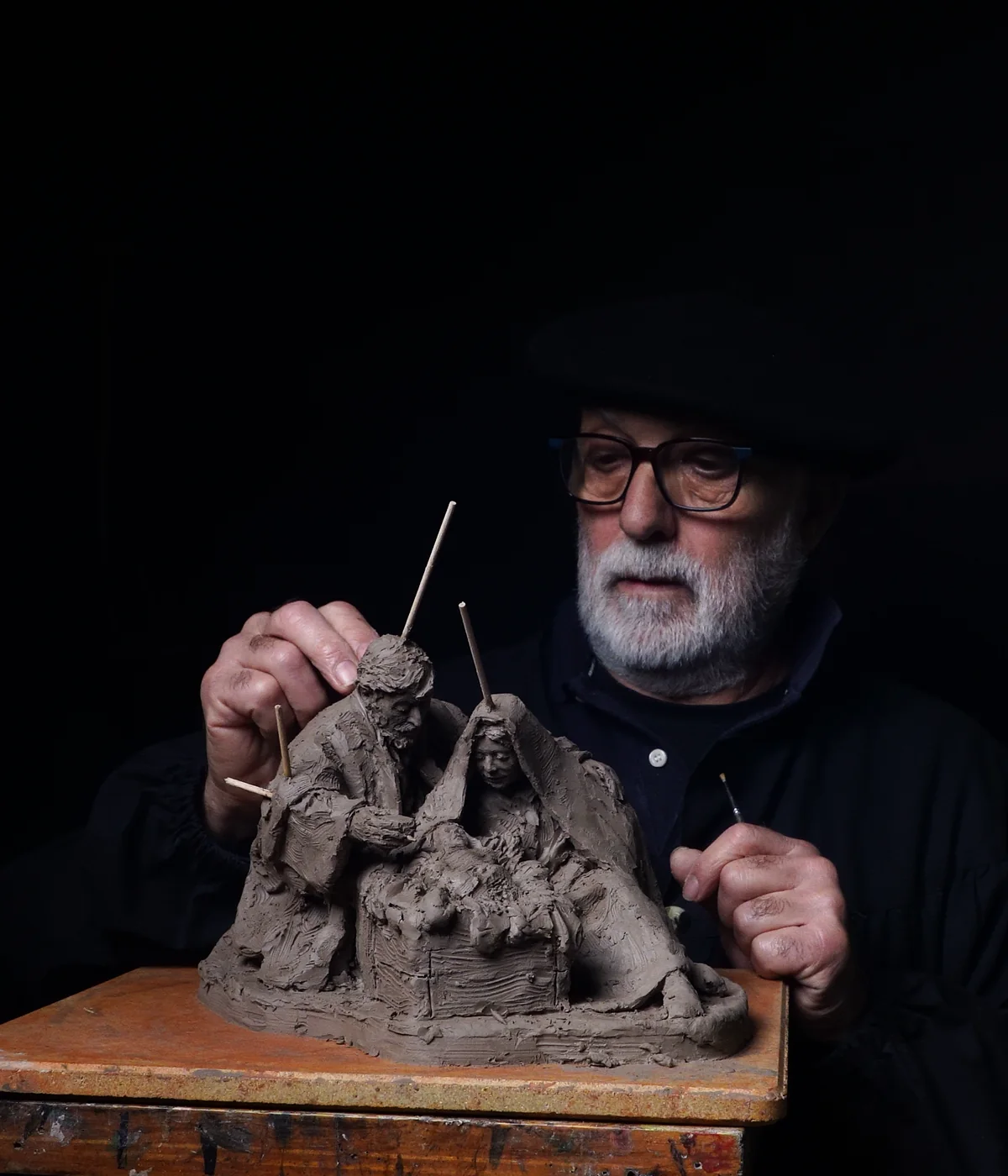
Emili Solé models the Nativity group in clay on the sculptor’s stand: Joseph, leaning towards the manger, and Mary, covered by her mantle.
Emili Solé in his Studio.

Sculptor

Emili Solé

The project grows out of Emili Solé’s work as a sculptor and the questions that arise when studying a figure, composing a scene and giving form to a work of art.

Research is not an erudite embellishment, nor is tradition a formula to be repeated automatically. Both help to observe, compare and make informed sculptural decisions.

Discover Emili Solé and his Studio