The sculptor

I am Emili Solé, a sculptor

I have worked professionally as a sculptor since 1984. This site presents not only finished works, but also the work that makes them possible.

This site is not meant to be a complete catalogue of my work or an exhaustive biography. It presents the part of my career that helps to understand the work gathered here, the research that sustains it and its relationship with the nativity tradition.

Before touching the material, I need to understand fully what I am going to represent. Observation, research, comparison and composition are not separate from sculpture: they are part of how it comes into being.

The video shows the clay modelling of the Nativity, first figure of the new stage of the Biblical Nativity collection, in the Studio’s recording room.

Emili Solé working in his Studio.

I research first. Then I compose. And when everything finds its place, the figure is born.

Research, composition and sculpture

From research to volume

My work begins long before modelling.

Reading, documenting, observing and comparing are part of the process—not something that precedes the work, but its first stage. Only when that work begins to become clear can the figure truly hold together.

As the research progresses, the work also begins to take shape in my mind’s eye. Sometimes it appears quite clearly before I touch the material; at other times it reveals only a direction, an atmosphere or a possible structure.

I usually begin directly with a modelled sketch, without preliminary drawings. At this first stage I am not looking for detail, but for the work’s overall structure: its volume, voids, composition and the relationship between its masses.

The sketch is not about copying an already resolved image, but about testing it. Sometimes it confirms what I had imagined; at other times, the work itself begins to ask for a different form as I proceed.

  1. ResearchObserve, document and compare in order to understand.
  2. ComposeOrganise what has been learned and establish the work’s relationships.
  3. ModelTest in volume the figure that is beginning to emerge.

Dimension and presence

Scale also shapes how the work is conceived

Scale is not a secondary consideration. From the outset, it conditions how a sculpture is understood.

A 9-centimetre figure is not conceived in the same way as one measuring 180. Visual weight, presence, the relationship between parts and the construction of the whole all change. Just as format matters in painting, size matters in sculpture.

As the sketch begins to clarify the work, its appearance is not the only decisive factor. I also need to understand the final piece’s dimensions and how its scale will affect its structure, presence and relationship with space.

Technique and scale do not enter at the end: they are part of how the work is conceived.

Training and media

Classical foundations, a contemporary outlook

I trained at the Faculty of Fine Arts of the University of Barcelona. Although my academic specialisation was figurative painting, I always felt the need to understand the media of sculpture in depth.

An open-ended education

During those years I also pursued more direct sculptural training on my own and broadened my education through printmaking and mural painting. Later I incorporated other resources, including 3D modelling, which I taught myself.

I do not see this diversity as dispersion, but as an expansion of the means available to meet the same demand: finding the most suitable way to bring each work into being.

Each technique opens up a different possibility, but none has value in itself unless it answers to a work that has already been conceived.

Knowledge of the craft

Modelling in clay, waste moulds, plaster casts, transferring forms into marble or wood with the pointing system, and bronze casting using the lost-wax process gave me an understanding of the craft that I still consider essential.

Fine Arts was not only technical training. It also meant drawing, anatomy, composition, art history and a more conscious way of thinking about visual language.

New materials and processes have appeared over the years. The means change. The standard does not.

The Child of the Nativity, Biblical Nativity collection, during modelling in ZBrush: above, the figure; below, the tablet. Recording by Emili Solé, 2026.

New tools

3D modelling as a sculptural tool

In traditional small-scale work, the material itself imposes real limits. Clay has weight, malleability and fragility; certain volumes must be supported during the process, and the piece can deform while drying or firing.

That is why 3D modelling interests me not only as a technical resource, but as a sculptural tool. It allows me to conceive the work at its actual scale, study its structure more closely and develop the figure without some of the physical constraints of a reduced sketch.

I do not see it as a substitute for sculpture, but as an expansion of possibilities within the same practice.

Figuration

My position as a sculptor

I do not understand sculpture as an idea on one side and execution on the other.

A work needs thought, but also body, structure, presence and formal truth. That is why I work figuratively: it allows me to think through the work as I give it form, without accepting an artificial separation between thought and craft.

Scale changes, materials may change and every project brings different needs. Rigour remains.

The Studio’s recording room: the sculptor’s stand in the centre, Rembrandt-style lighting and, at the back, the worktop for the polychromy sessions and the editing of the recordings.

Place of work

The Studio

The Studio is my workplace: the space where I research, compose and model.

Here, research begins to become sculptural decisions. A figure does not appear as an isolated object, but as part of a process that makes it possible to understand what it represents, what research underpins it, which project or collection it belongs to, and how it relates to other works or scenes.

The Studio does not refer to the whole of my output. It is the actual place where thought, technique and material meet and where the figure is finally born.

Since October 2026, the modelling of each figure has been recorded from the first lump of clay to the signature. For that purpose part of the Studio is set up as a recording room: the sculptor’s stand occupies the centre of the room, the light follows the scheme known as Rembrandt lighting —one main source, high and to the side, which leaves a triangle of light on the opposite cheek and gives volume to the form—, and a worktop takes the polychromy sessions and the editing of the recordings published on this very site.

The current focus of my work

Nativity art and practice: the Studio and the Manual

My current work focuses especially on the art, practice and study of nativity scenes, and develops through two related spaces: the Nativity Figure Sculpture Studio and the Manual of Nativity-Scene Art and Practice.

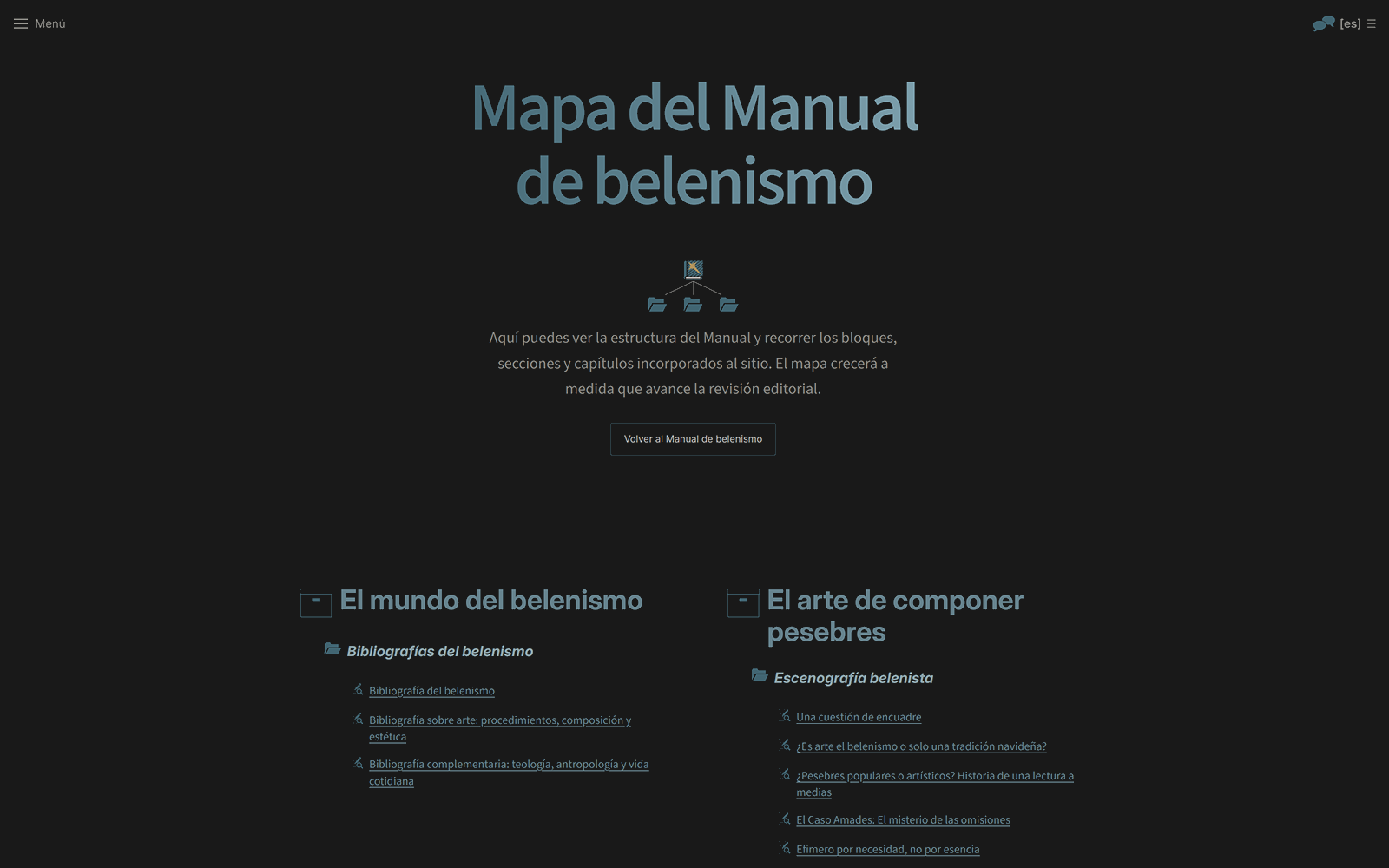
Map of the Manual on emilisole.art: the title, the introductory note and the start of the blocks “The world of nativity-scene art” and “The art of composing nativity scenes” with their chapters.
The map of the Manual as published on this site: blocks, sections and chapters incorporated.

Manual of Nativity-Scene Art and Practice

The Manual arose from the need to examine what we do when we create a scene, choose a figure, interpret a tradition or seek unity, presence and truth in a nativity scene.

It brings together and develops research into nativity-scene art, practice and tradition, the art of composing nativity scenes, and the scenes and characters of the Nativity cycle. It does not prescribe fixed formulas: it compares sources and seeks to make every decision understandable and justifiable.

Consult the Manual of Nativity-Scene Art and Practice
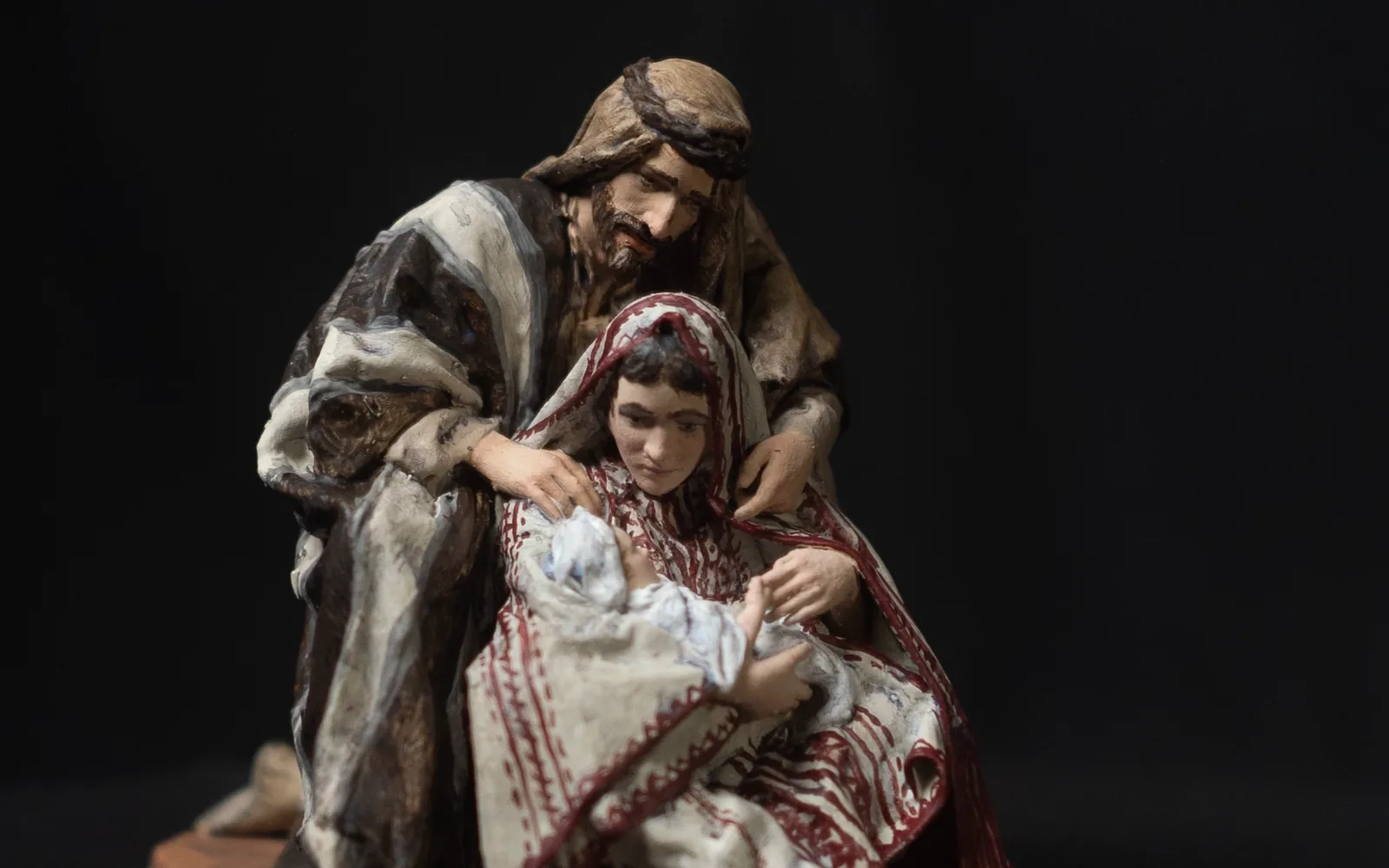
Nativity of the Biblical Nativity collection: Joseph, standing and leaning forward, covers with his cloak the seated Mary, who holds the Child in her arms.
Nativity of the Biblical Nativity collection, modelled in 3D by Emili Solé.

Work

Figures and collections

Three collections of nativity figures: the Biblical Nativity, the Madrid Popular Nativity Scene and the Catalan popular figures. Every figure has its own page, with what had to be looked at before it was created.

It is a studio at work: each figure goes up when it exists. Since October 2026, every new figure is modelled directly in clay, a single piece in terracotta, with the modelling recorded from the first lump to the signature.

See the collections

Life-size processional work

The work beyond the Studio

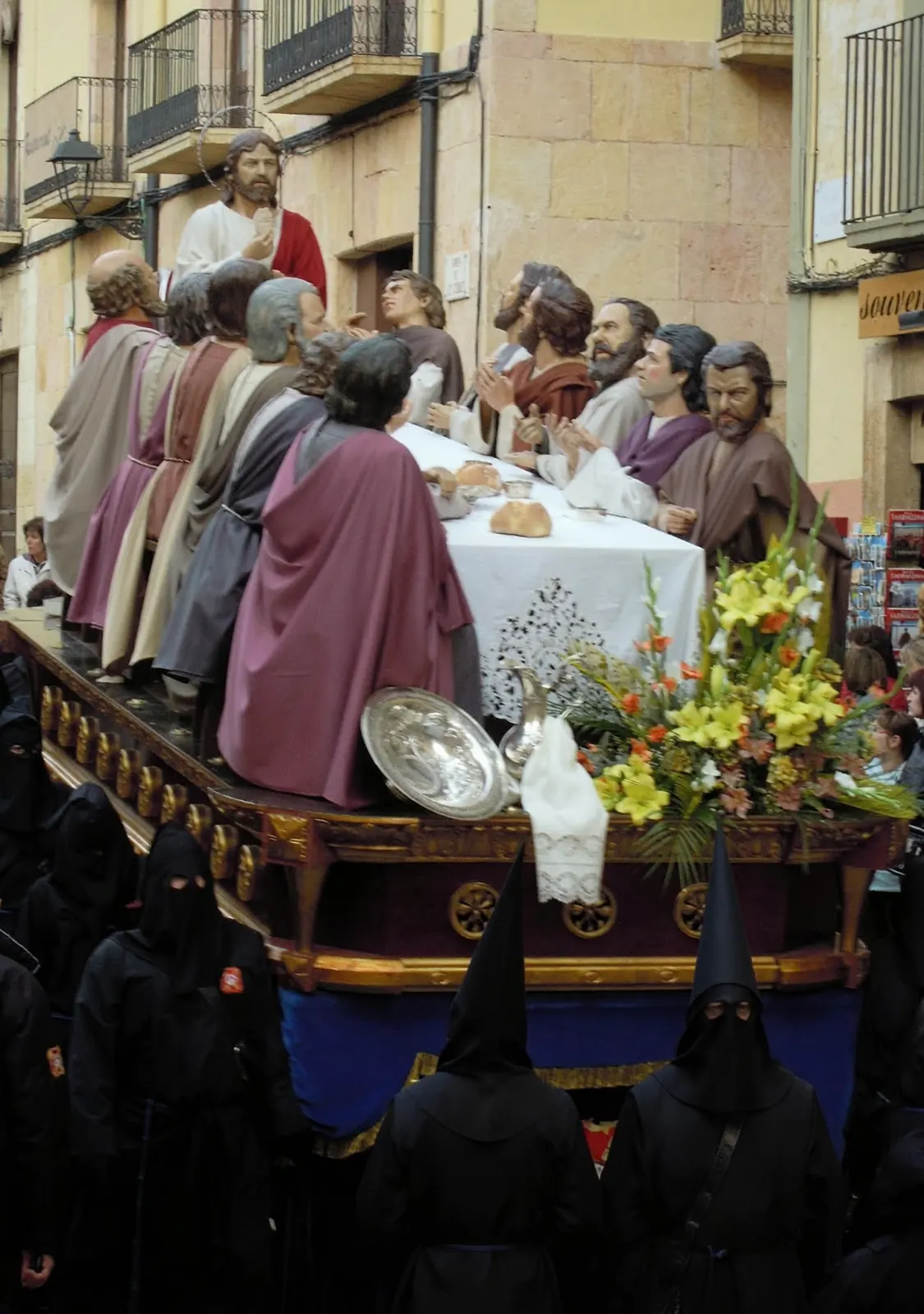
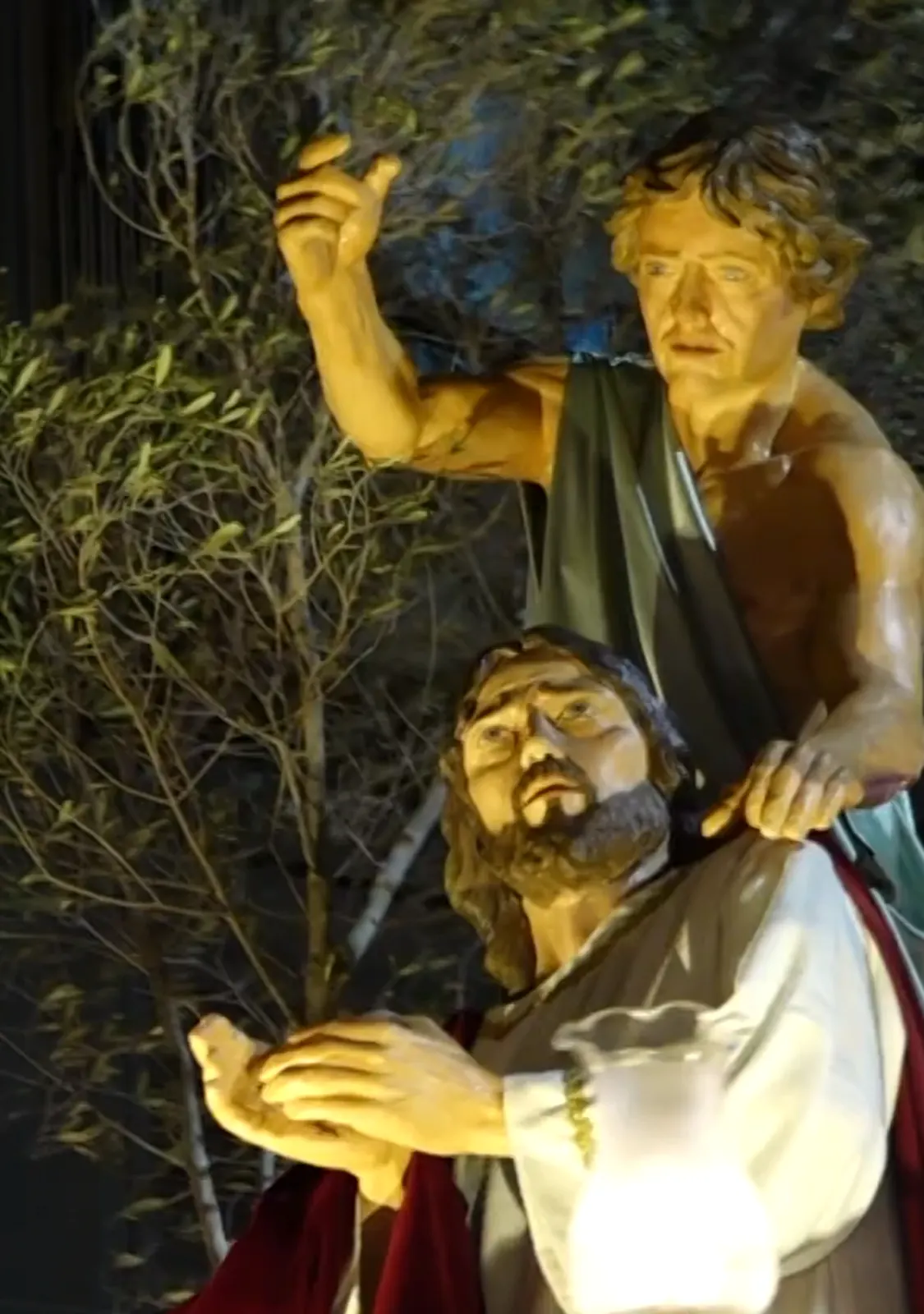
I mention here three processional groups made for Holy Week in Tarragona and Constantí because they represent episodes from the life of Jesus and show that my sculptural work is not confined to the small or reduced format.

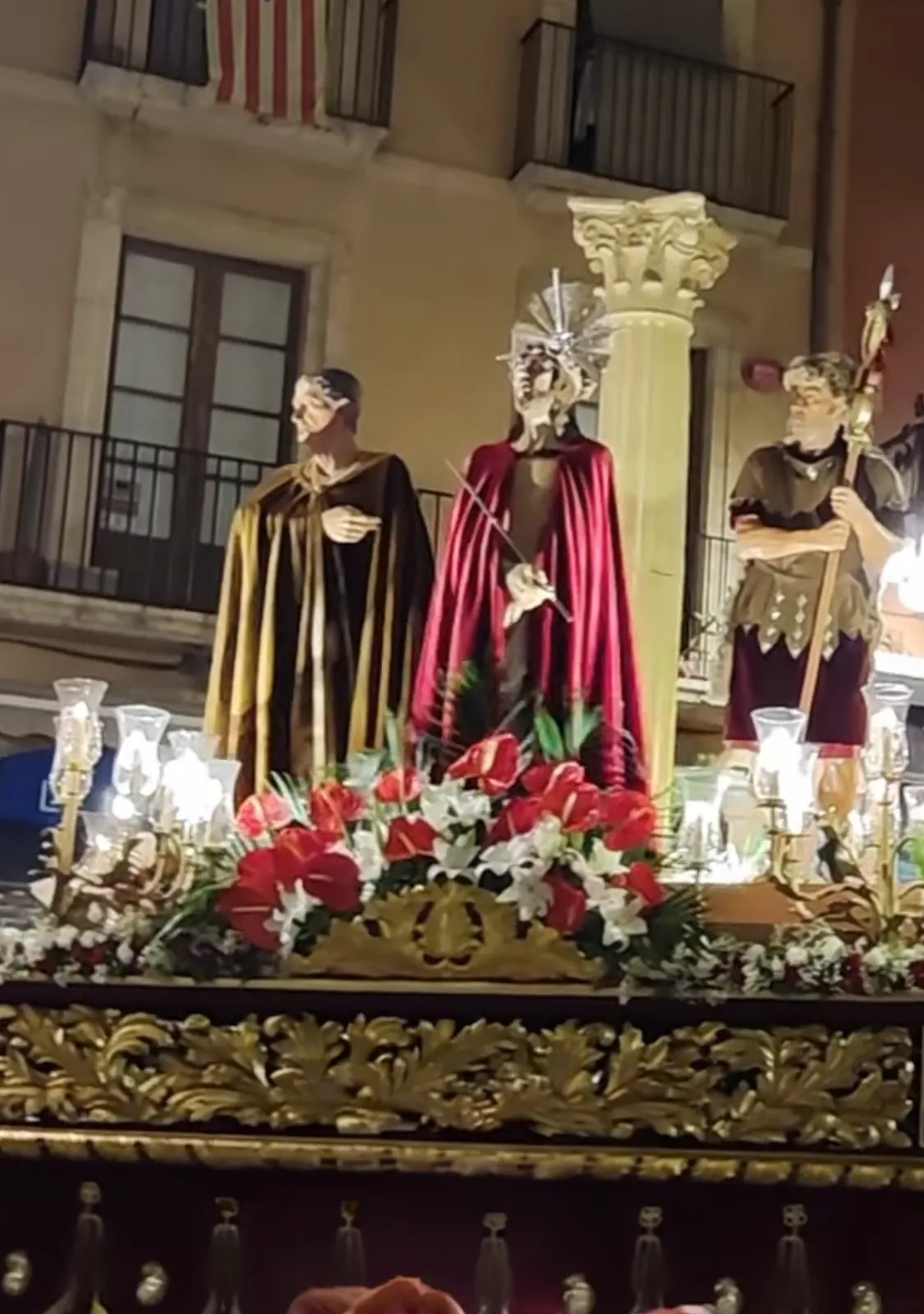
The Ecce-Homo float in procession at night: Jesus in a red cloak and crown of thorns in the centre, Pilate on his left and a Roman soldier with a spear on his right, on the float with flowers and lanterns.
Ecce-Homo, Tarragona, 1994. Still from the video “Semana Santa de Tarragona 2025. Processó del Sant Enterrament. Baixada Misericòrdia. Ecce Homo”, by Fernando Maluenda, YouTube, 2025.

Tarragona · 1994

Ecce-Homo

Made for the Germandat del Sant Ecce-Homo de Tarragona, this processional group forms part of the Holy Burial Procession. The composition represents the moment when Pilate presents Jesus to the crowd.

The Sant Sopar float in procession through a street in Tarragona: Jesus and the twelve apostles around the table, on the float, with the hooded bearers beneath.
Sant Sopar, Tarragona, 1995. Still from the video “20é Aniversari Sant Sopar de Tarragona”, by bikerpyrata productions, YouTube, 2014.

Tarragona · 1995

Sant Sopar (The Last Supper)

Made for the Gremi de Marejants de Tarragona, the group comprises Jesus and the twelve apostles gathered around the table. It also forms part of the Holy Burial Procession.

Detail of L’Oració a l’Hort: Jesus kneeling, hands joined and eyes raised, and the angel rising behind him among the olive trees.
L’Oració a l’Hort, Constantí, 1996. Still from the video “Constantí manté viva la tradició”, by TAC12, YouTube, 2026.

Constantí · 1996

L’Oració a l’Hort (The Agony in the Garden)

Made for the Confraria de la Puríssima Sang de Nostre Senyor Jesucrist de Constantí, the group depicts Jesus kneeling in Gethsemane and the angel presenting him with the chalice.

Christ occupies the foreground, while the angel rises behind him and completes the group’s vertical structure.

Working at this scale calls for a different reading of volume, distance, the rhythm of the whole and the relationship between figures. Dimensions, materials and the relationship with processional space change, but the essentials do not: prior research, composition, anatomy, control of volume and a sense of the whole are equally necessary here.

The same standard

What unites my work

Whether in nativity scenes, historical figures, castells or works made for Holy Week, the same underlying need remains: to observe and understand before representing.

I am interested in the human figure, its presence and gesture, the internal structure of a scene, and the relationship between form and meaning. That is why this site presents more than results. It also presents the work, the enquiry and the decisions that sustain them.

That is what I seek in every work: that it should hold together through its form, its composition and the inner truth that unites them.

I research first.
Then I compose.
And when everything finds its place, the figure is born.