
 ≈ 12 min

A nativity scene can have place and time, and still be without a world.
The human world is either represented or erased.
After time, the world
So far we have worked on the biblical nativity scene from the narrative, from the four truths the scene can sustain, from the figure of the interpreter and from the time the scene needs.
But one dimension still remains unnamed.
The first-century Judaea in which the birth of Jesus is inscribed is not a stage set.
It is a subjugated land, with its social structure, its political tensions, its material inequalities and its religious expectations. That world does not surround the scene from outside. It is what gives it gravity and meaning.
A biblical nativity scene does not change only when its scenography improves. It changes when it begins to let one glimpse the human world in which the birth acquires its weight.
A subjugated land
Judaea in the first century is not an independent region. It is integrated into the administrative and fiscal machinery of the Roman Empire. Rome controls the territory with governors, stationed troops and a structure of tribute that reaches down to the last village. Rebellion is harshly punished, and the military presence is a daily reminder that political freedom is not a real prospect.
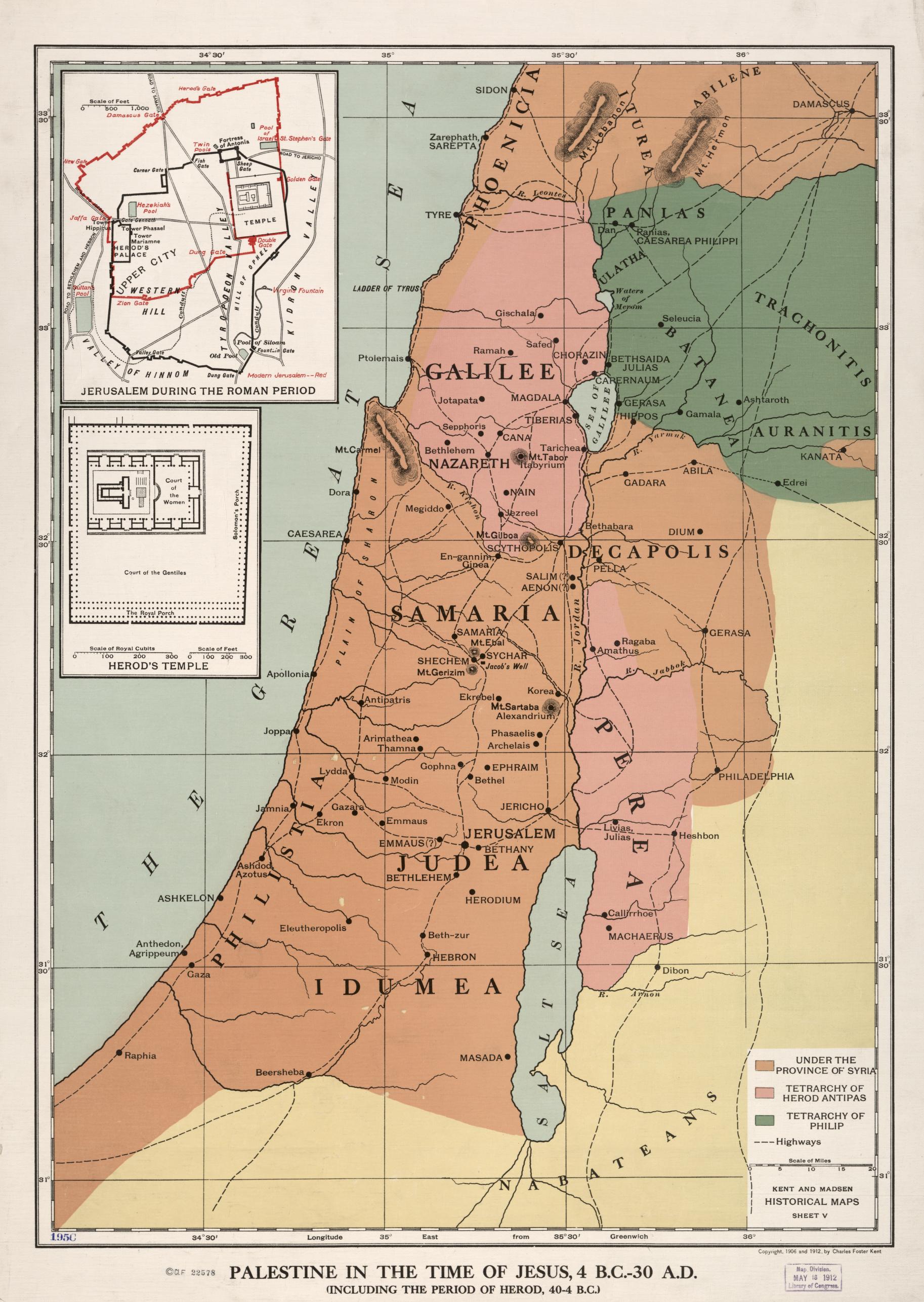
Local government is exercised through clients of the empire. Herod the Great and his successors reign with Rome’s consent, and often against the opinion of the people they govern. They depend on the empire more than on the people they administer, and their conduct —especially Herod’s— alternates ambitious public works with brutal repression whenever their power is threatened.
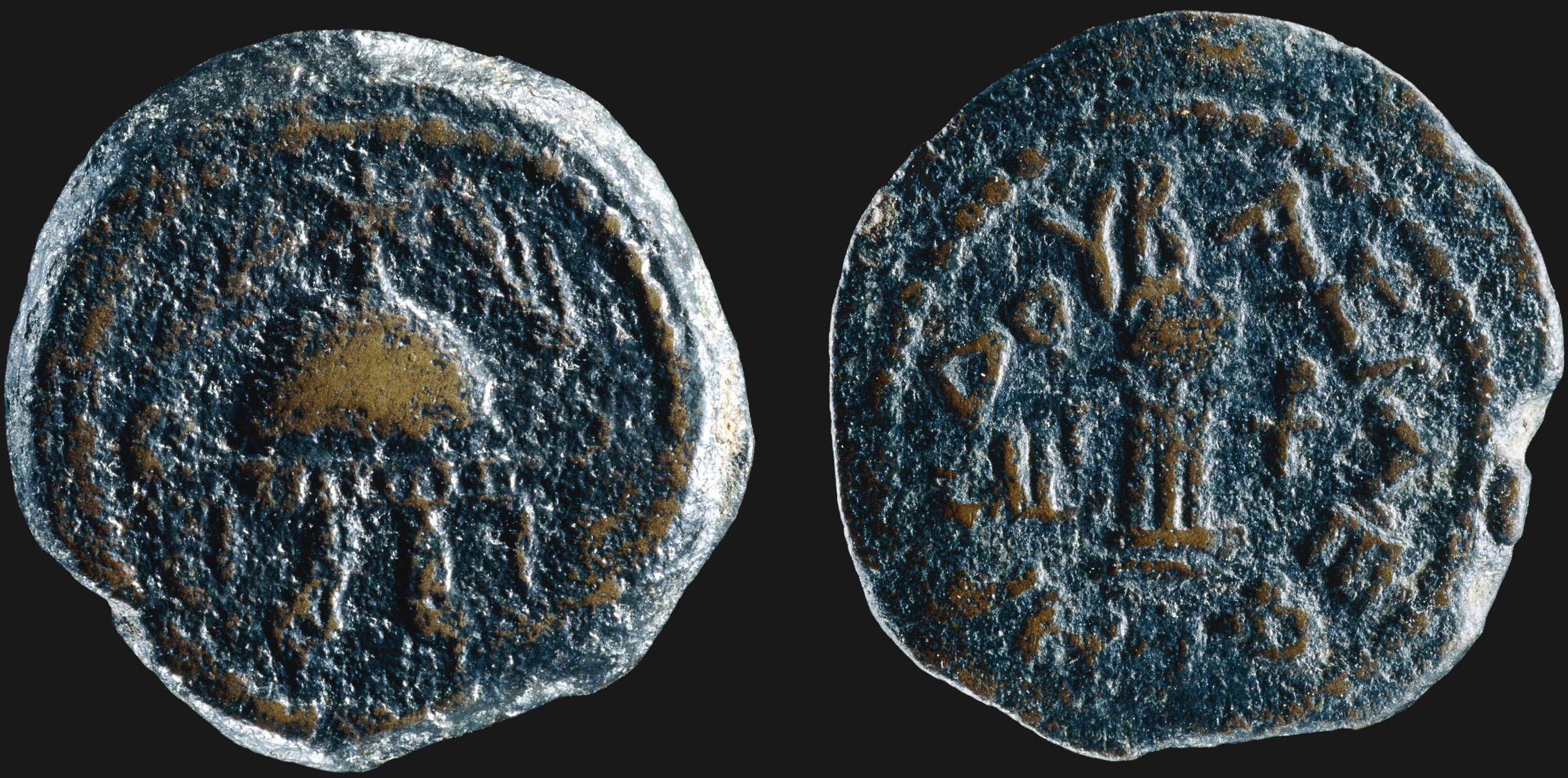
That framework is not incidental. It conditions everything from the family economy to religious life, and very particularly what a first-century Jew expects of God.
Inequality and stratification
Under that occupation, society is rigidly stratified.
A minority accumulates the resources: large landowners, the high priesthood linked to the Temple, well-off merchants, families close to Roman power. The majority live in precariousness. Indebted peasants who lose their land and fall into debt bondage. Craftsmen with minimal margins. Fishermen whose economy depends on a single day’s work. Shepherds ranging from the small flock owner to the landless hired hand —a continuum that the anthropology of the figures sets out in detail—, many of them on the economic margins. Taxes are many —to the Temple, to Rome, to the local rulers— and add up until they choke the weakest families.
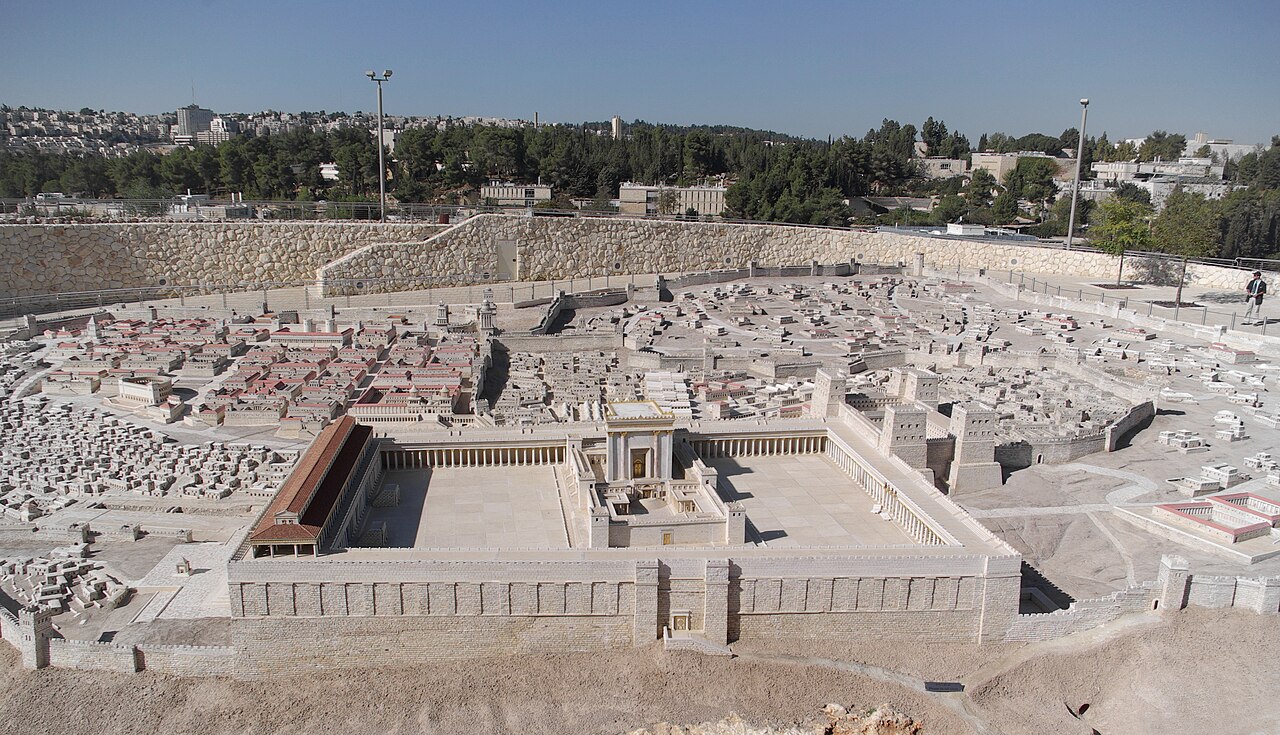
Within that society the strata are rigid. Sadducees and the priestly aristocracy control the Temple. Pharisees and scribes have authority through their knowledge of the Law, without necessarily coinciding with political power. Beneath them, a mass of day labourers, free men without resources, servants and slaves. Women sustain family life and the handing on of tradition, but occupy a secondary place in public and religious life. And on the margins live those whom society excludes: the sick, lepers, tax collectors, prostitutes, people marginalised on economic, religious and moral grounds all at once.
That does not work as a backdrop. It is the human reality within which the birth acquires its weight.
A diverse expectation
Within that framework, the expectation of the Messiah has no single form. The word «Anointed» sums up a shared longing, but the concrete figure that longing awaited varied greatly from one group to another.
Some dreamt of a warrior king in the manner of David, a charismatic leader who would defeat Rome and restore Israel’s political independence. Others awaited a supernatural irruption: a visible sign that the time of redemption had come, a divine judgement, a cosmic transformation. Others awaited no particular figure, but the direct action of God in strengthening the righteous and weakening the oppressor, with no need for weapons or military campaigns. The Essenes, withdrawn into the desert, even spoke of two distinct messiahs, one priestly and the other royal.
What was shared was firmer than what diverged: the conviction that only God could bring restoration, and the longing for an intervention that would put an end to suffering and restore justice. But what diverged matters to the nativity-scene maker, because it corrects a deep-rooted iconography. The messianic expectation of the first century could not be resolved into a single image, and the scene of the birth is inscribed in that plural horizon, not in one unified after the fact.
How the reading of the scene changes
All this matters little if it does not change the way of looking at the scene. But when it truly enters it, one no longer sees the same thing.
The shepherds stop being picturesque figures. They are humble people from a real society —real humility, not picturesque destitution: the trade ranged from the small owner to the landless hired hand, as the anthropology of the figures sets out—, far from urban life and from the centrality of the Temple. That the announcement of the birth should reach them first stops being a pleasant detail: it is a sign that the narrative points towards those who do not count.
The family of Bethlehem stops being just any family. It is a poor family, in an occupied land, travelling under a Roman administrative order and finding no lodging in the town of its ancestry. Each of those conditions is concrete material for the scene: the weariness of the journey, the precariousness of the refuge, the humbleness of the manger acquire another weight when the world around them is not abstract.
The announcement stops being a kindly notice. It strikes upon centuries of active waiting, in a people that read its history as a promise yet to be fulfilled. The joy of the passage —«he aquí os doy nuevas de gran gozo, que será para todo el pueblo» (behold, I bring you tidings of great joy, which shall be to all the people), Luke 2:10— does not carry its full weight if whoever receives it is not placed within a horizon of oppression and real waiting.
It is not a matter of loading the scene with sociology. It is a matter of not building it as if it happened in a human vacuum.
Only then does the birth stop looking like a timeless scene and begin to weigh as an event.
What this is not
It is worth saying clearly what this reading is not.
It is not a matter of reducing the birth of Jesus to a political reading. The spiritual dimension of the narrative is not exhausted in its historical framework, and claiming otherwise would impoverish the scene as much as erasing that framework.
Nor is it a matter of creating a new stylistic category. The name «Pesebre de Liberación Histórica» — Historical Liberation Nativity Scene— has been considered and rejected: the block keeps the name that already exists, biblical nativity scene, and works to sustain it with greater rigour, not to replace it.
It is rather a matter of not separating the spiritual from the real history in which the birth was announced, awaited and narrated. Messianic hope is not born in a vacuum. It is born in a people with memory, with wounds, with faith and with a desire for justice. A scene that ignores that ground may still be devotional, but it ceases to be what we mean here by a biblical nativity scene.
What the nativity-scene maker gains from this framework
When this human world enters the work, the way of seeing the figures changes before they are modelled.
Poverty stops being an ornament. A threadbare mantle, a posture hunched by the cold, weathered hands are not resources of devotional humility: they are signs of a concrete life, subject to labour and to a climate. Humility, understood in this way, is not an aesthetic one chooses, but the form in which a real material condition shows itself.
The truth of those figures begins when they stop looking like humble characters and begin to look like people who have really lived that way.
The same happens with hope. It is not an abstraction the scene illustrates, but what concrete people, situated in a concrete history, direct towards a horizon that belongs to them.
The nativity scene is not made more complicated. It is stripped of an idealisation that had begun to be confused with the narrative itself.
Before going on
So far we have thought about the place, the time and the human world in which the birth of Jesus is inscribed. But every scene is built, in the last instance, from concrete figures.
It remains to be seen who those figures are. How old the protagonists are, what general physiognomy corresponds to a Jewish family from Galilee, what they wear, in what palette, which animals are plausible for the place and the season, what place the secondary figures occupy.
That will be the next step.
References
- ↑ [1] Kent, Ch. F., Palestine in the time of Jesus, 4 B.C.-30 A.D.: (including the period of Herod, 40-4 B.C.) [colour map, 59 × 42 cm], 1912 (Kent and Madsen Historical Maps, sheet V). Library of Congress, Geography and Map Division. https://lccn.loc.gov/2009579463
- ↑ [2] Eight-prutot coin of Herod the Great [copper alloy, 35-34 BC (year 3)]. British Museum, 1908,0110.263. © The Trustees of the British Museum, CC BY-NC-SA 4.0. https://www.britishmuseum.org/collection/object/C_1908-0110-263
- ↑ [3] Ben-Eliyahu, E., «Models of the Temple at Jerusalem» (JRA entry), Oriental Institute, University of Oxford. https://josephus.orinst.ox.ac.uk/archives/745
- ↑ [4] Werner, B., Jerusalem Modell BW 2 [photograph, 9 November 2008], Wikimedia Commons, public domain. https://commons.wikimedia.org/wiki/File:Jerusalem_Modell_BW_2.JPG
