
 ≈ 15 min

Before modelling a face, it is worth knowing the story that face inhabits.
What story exactly are you telling?
So far we have tried to clarify what can give greater authenticity to a biblical nativity scene, what references that search can rest on and how those references begin to transform the space, the light, the objects and the atmosphere of the scene.
But none of that is enough if we forget one decisive question:
What story are we really representing?
Because a nativity scene is not born only of a more or less convincing setting. It is also born of a narrative.
And when the narrative becomes blurred, when it is mixed without criteria or taken for granted as if we already knew it, the scene may keep beauty, emotion or visual force, but it loses an important part of its narrative truth.
Going back to the text means ceasing to treat it as a pious accompaniment and beginning to read it as a script.
Not in the modern sense of a perfectly detailed screenplay, but as the narrative basis that guides the scene, gives meaning to the actions, orders the presences and helps to distinguish what really belongs to the narrative from what is born of later developments, of tradition or of artistic interpretation.
What we mean here by «script»
In this Manual I speak of a script to refer to the set of scenes narrated in the Gospels of Matthew and Luke that hand down the birth and infancy of Jesus.
These narratives are not modern biographies, nor chronicles written according to present-day historiographical criteria. They are narratives of faith, dense with meaning, in which memory, proclamation, theological interpretation and storytelling are interwoven.
But precisely for that reason they should not be read superficially.
The nativity-scene maker does not work with a stage set without a story. They work with a narrative that has characters, journeys, annunciations, silences, tensions, gestures, times, words and omissions.
Going back to the script means recognising that the scene should not be born only of an imagined atmosphere, but also of a more attentive reading of what the text says, of what it suggests and of what it leaves open.
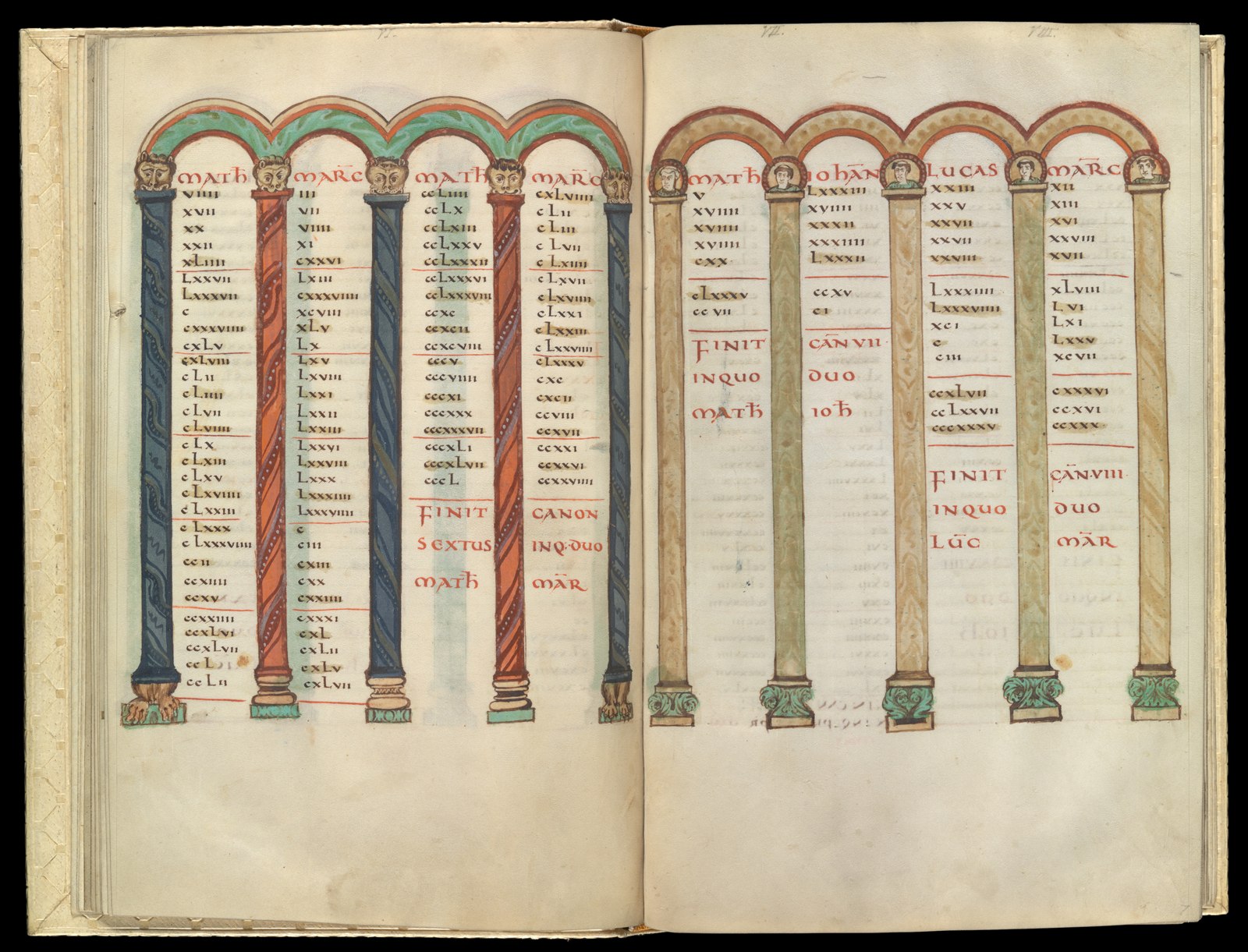
The infancy Gospels as a narrative source
For the cycle of the infancy of Jesus, the main narrative core lies in:
- Luke 1–2
- Matthew 1–2
They are, in this block, the reference textual source.
Not because they resolve everything, nor because they describe every detail visually, but because that is where the narrative structure from which the representation is born is found: the annunciations, the decisions, the journeys, the birth, the arrival of the shepherds, the visit of the Magi, the presentation in the Temple, the flight and the return. The scene-by-scene path unfolds further on, in the map of the cycle.
Outside this core there may be later traditions, devotional developments, apocryphal texts or artistic images of enormous interest. But the script, in the strong sense, begins here.
Why it is not enough to «know what it is about»
We often believe we know the story of the birth of Jesus well because we have seen it represented since childhood.
But having seen a scene many times does not mean having understood its narrative logic.
We know that Mary, Joseph, the Child, the shepherds and the Magi are there. But we do not always ask ourselves which evangelist narrates each episode, what sequence each one follows, what details the text really mentions and what we have added through tradition, through custom or through a mixing of narratives.
Without this work, the representation runs the risk of resting on a diffuse narration: a «story of the birth» built up by accumulation, in which everything seems to fit because it has always been seen together.
Matthew and Luke do not tell exactly the same thing
Both evangelists speak of the birth and infancy of Jesus, but they do not do so in the same way or with the same emphasis.
That should not be experienced as a problem to be hidden, but as a fundamental fact for the representation.
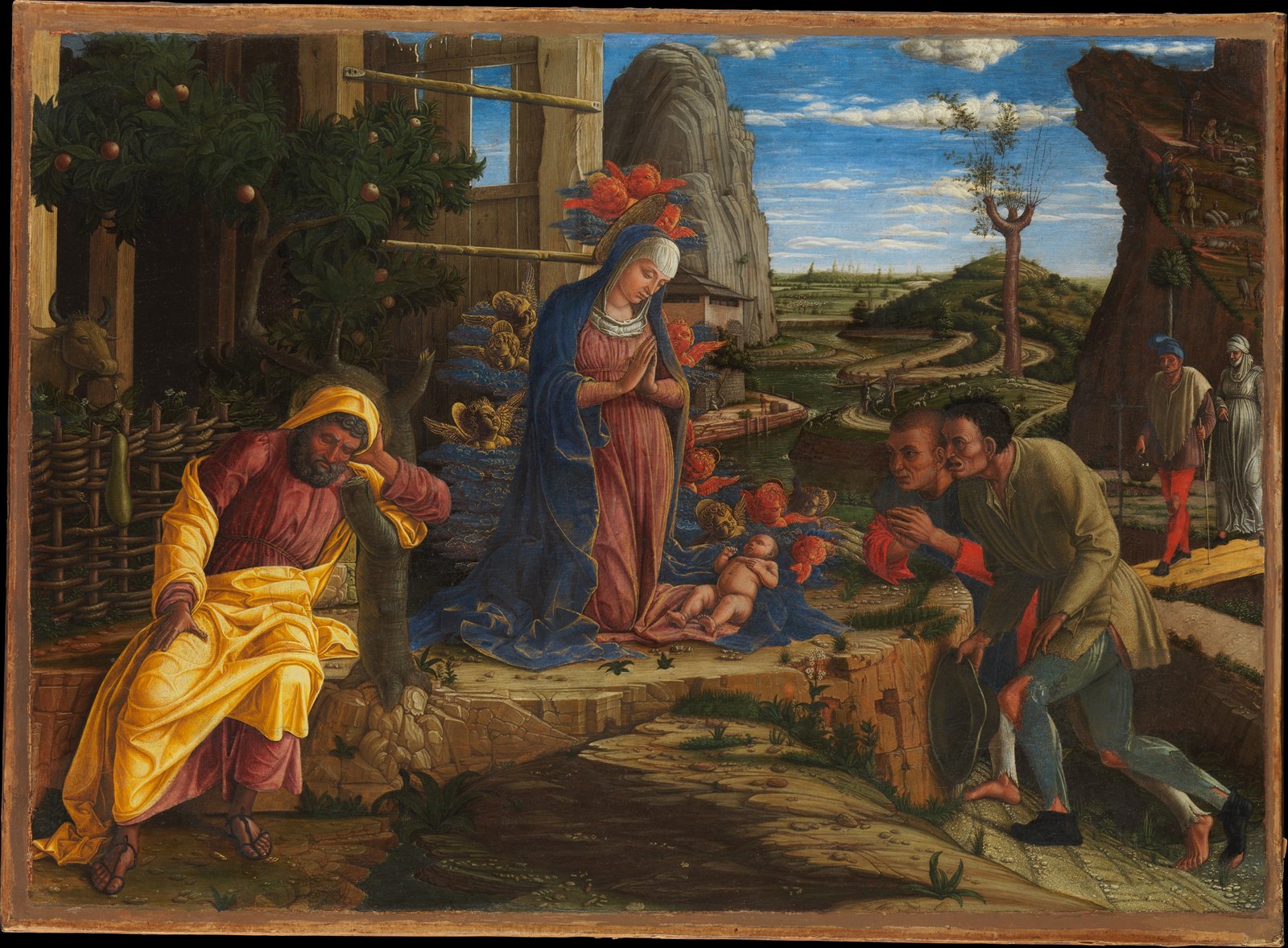
Luke
Luke develops a broader and more gradual narrative: the annunciation to Mary, the Visitation, the birth, the shepherds, the presentation in the Temple and, later, Jesus among the doctors.
His way of narrating gives more room to the human development of the scenes, to the journeys, to inwardness and to certain gestures of recognition.
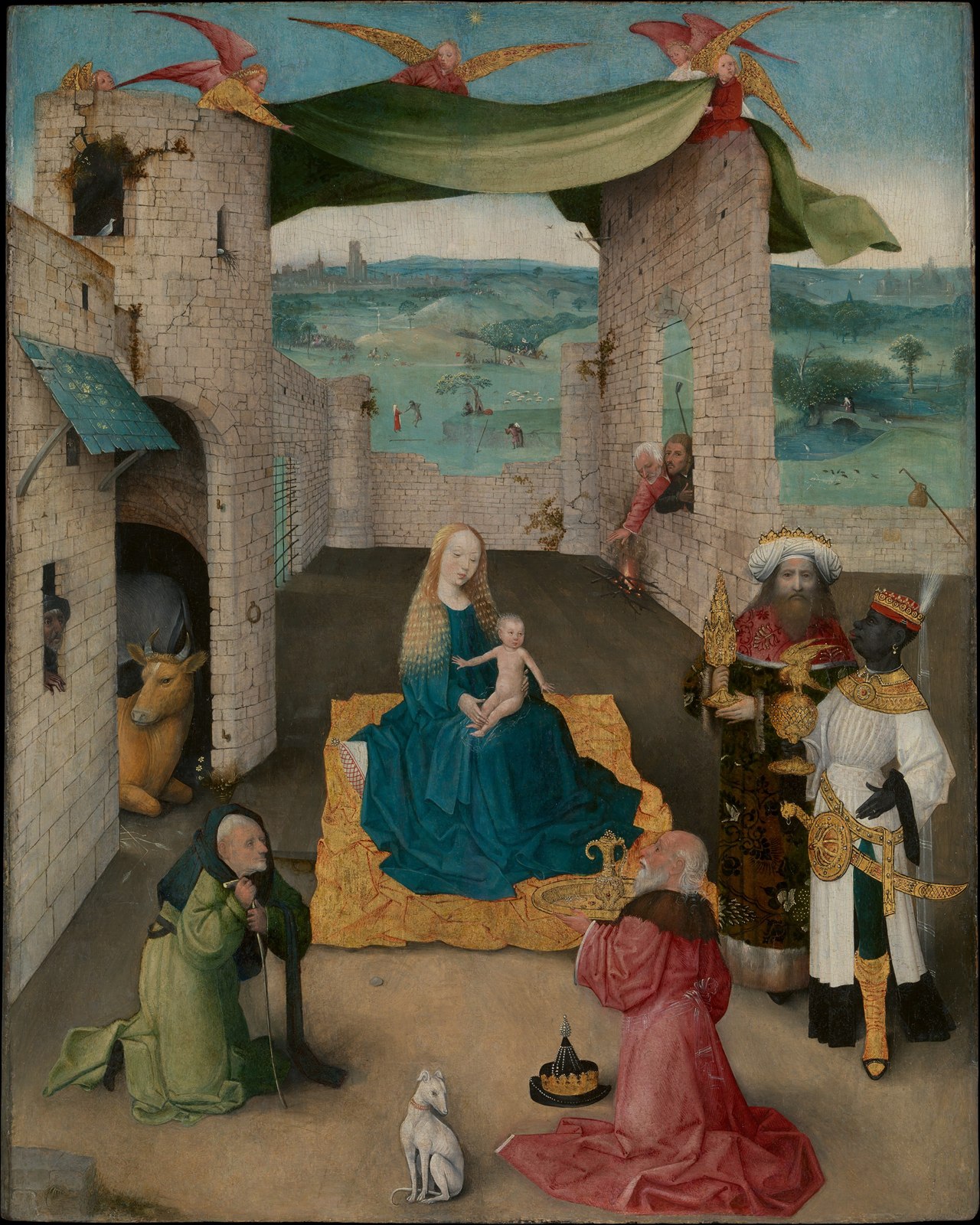
Matthew
Matthew focuses on other moments: Joseph’s situation, the dreams, the birth stated with sobriety, the Magi, Herod, the flight into Egypt and the settling in Nazareth.
His narrative introduces more tension, more conflict and a more visible relationship with the Scriptures and with the question of fulfilment.
Both narratives are decisive, but they are not organised in the same way, nor do they contribute the same scenes.
Luke 1–2Human development and recognition
- Annunciation to Mary
- Visitation
- Birth and manger
- Shepherds
- Presentation in the Temple
- Jesus among the doctors
Matthew 1–2Tension, conflict and fulfilment
- Joseph’s situation
- Dreams
- A sober birth
- Magi in a house
- Herod
- Flight into Egypt
- Settling in Nazareth
They coincide in the birth. They do not coincide in the complete sequence or in the function of each scene.
What changes when the nativity-scene maker takes that difference seriously
One stops working with a «single story» built by custom and begins to perceive that each scene has a source, a logic and a narrative function.
That forces one to ask more precise questions. Which evangelist does the scene come from? What really happens in that passage? Who appears and who does not? What elements does the text mention, and what part will have to be reconstructed with prudence?
That change means the scene stops resting on a blurred story and begins to be born of a more conscious reading.
Can the two narratives be combined?
Yes, they can. The Christian and nativity-scene tradition has done so for centuries, and will go on doing so. But it is worth knowing what one is doing when one does it.
Combining scenes from Matthew and Luke is not, in itself, a mistake. What is a mistake is mixing them until what each evangelist narrates differently is erased, as if the cycle formed a single sequence without tensions or differences.
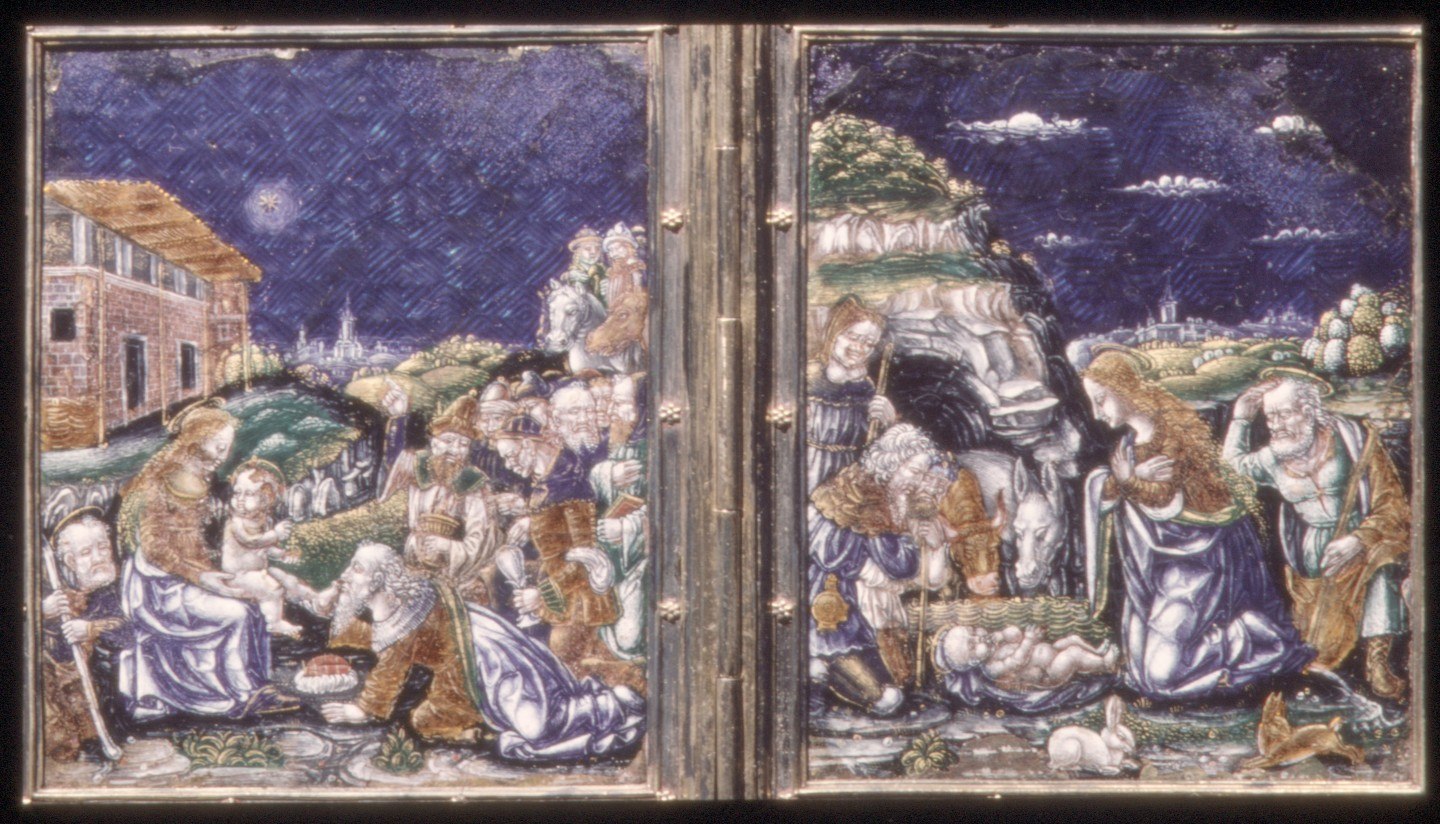
The clearest case is also the most common: shepherds and Magi gathered at the same time before the manger. In Luke, the shepherds arrive that same night to find a newborn lying in a manger. In Matthew, the Magi visit the child in a house, probably months —or more— later, and the narrative is silent about the shepherds. Putting the two scenes together in a single instant is no minor detail: it is overlooking the time of the narrative and the different function of each visit within it.
An artistic synthesis can be legitimate. What the nativity-scene maker should not do is confuse it with a naive reading in which everything seems to belong to the same thread because it has always been seen together.
The script does not say everything, but it does guide what is essential
The Gospel text does not by itself resolve every visible detail of a scene.
It does not tell us exactly what each space was like, how all the objects were arranged, what shape the manger had, whether or not certain animals were there, what particular light filled the interior or how each character was dressed at each moment.
But that does not make it a useless text for the representation. Quite the opposite.
The script does not serve only to extract data. It serves to guide the meaning of the scene:
- what action takes place,
- what tension runs through that moment,
- which characters are central,
- what relationship exists between them,
- what inner climate weighs on the scene,
- and what sobriety or intensity the episode calls for.
Sometimes, more important than a particular fact is understanding what is truly happening at that moment of the narrative.
Reading the text as a nativity-scene maker
Reading the text as a nativity-scene maker does not consist only in knowing which episode comes after which. It consists in entering the scene like someone who needs to understand what is truly going on before beginning to give it form.
That is why it is not enough to know the episode in a general way. One has to learn to read it from the decisions the scene will have to make.
That calls, among other things, for asking questions such as these:
- Where does the scene take place and what surrounds it within the narrative?
- Who knows what is going on and who does not?
- What tension or what silence runs through the moment?
- What gesture would be consistent with what is being narrated?
- What part is born of the text, and what part will have to be completed by plausible reconstruction?
This way of reading does not cool the narrative or take away its spiritual depth. It makes it more incarnate and more true.
What the text states, what it suggests and what it does not say
One of the most important tasks of the nativity-scene maker is learning to distinguish three levels.
1. What the text states
There are things the narrative says clearly: an annunciation, a journey, a birth, a manger, a visit, a house, a dream, a flight.
That constitutes the firm core of the scene.
2. What the text suggests
There are other things that are not fully described, but can be inferred with considerable coherence from the context, the logic of the narrative or the historical world that surrounds it.
This is where an important part of the work of reconstruction comes in.
3. What the text does not say
And then there is everything that should not be stated as if it were Gospel fact.
There, it is best to be honest.
Not because interpreting it is forbidden, but because it is important to know when we are representing something sustained by the text, when a plausible possibility and when a convention inherited through tradition.
That clarity does not impoverish the work. It gives it more truth.
-
1
The text states
Firm core
Annunciation · journey · birth · manger · visit · house · dream · flight
-
2
The text suggests
Plausible reconstruction
Context · logic of the narrative · historical world · relationships between characters
-
3
The text does not say
Declared interpretation
Tradition · inherited convention · composition · artistic choice
Greater textual supportGreater interpretative responsibility
Understanding the script changes the scene
When the narrative is read with greater attention, many things change. The way of ordering the scenes in time changes, the relationship between the figures changes, and —sometimes without anyone noticing— the atmosphere of the episode changes.
Because one no longer composes from an inherited postcard, but from an understood action.
Then the nativity scene stops being a sum of characters placed with greater or lesser success and begins to become a visible narration.
Before going on
So far we have tried to give back to the text its role as a narrative source.
But a more delicate question still remains.
Because understanding the script does not consist only in knowing which scene each evangelist tells. It also involves recognising that these narratives do not work like a modern chronicle and that, even so, they remain the basis from which the nativity-scene maker composes.
That will be the next step.
References
- ↑ [1] Gospel Book [Carolingian Gospel book with canon tables, ca. 825–850]. The Metropolitan Museum of Art, inv. 2015.560. Public domain. https://www.metmuseum.org/art/collection/search/693765
- ↑ [2] Mantegna, A. The Adoration of the Shepherds [tempera on canvas, transferred from wood, shortly after 1450]. The Metropolitan Museum of Art, inv. 32.130.2. Public domain. https://www.metmuseum.org/art/collection/search/436966
- ↑ [3] Bosch, H. The Adoration of the Magi [oil and gold on oak, ca. 1475]. The Metropolitan Museum of Art, inv. 13.26. Public domain. https://www.metmuseum.org/art/collection/search/435724
- ↑ [4] Adoration of the Shepherds and Adoration of the Magi [painted enamel on silver, probably ca. 1480–1490]. The Metropolitan Museum of Art, inv. 14.40.705. Public domain. https://www.metmuseum.org/art/collection/search/192745