
 ≈ 18 min
We think we know by heart what we look at every day. A bicycle is enough to prove otherwise.
The bicycle test
There is a classic experiment in psychology that anyone can repeat at their own table: drawing a bicycle from memory — without looking at photographs, without searching for references: paper, pencil and recollection. The psychologist Rebecca Lawson did it systematically at the University of Liverpool, and the result is one of those that stay in the mind: more than 40% of the non-expert participants produced impossible bicycles — the most common error was to draw the chain running round both wheels, a bicycle that could not turn. And these were not people unfamiliar with the object. Among those who used one little or not at all, who were the majority, 97% had learned to ride a bicycle and 45% owned one.1
The phenomenon has a name in the literature: the illusion of explanatory depth — we believe we understand how everyday things work up to the exact moment when we have to explain them or draw them. The lesson is worth keeping, because it is not about bicycles: the same happens with a landscape, a room or the scenography of a nativity scene. One believes the scene is clear in the mind; on trying to set it down without having practised perspective, light and colour, the result does not convince — and whoever looks at it will not be able to say why, but notices it.
«Test | ¿Eres capaz de dibujar una bicicleta?» (“Test | Can you draw a bicycle?”), Magnet channel, in Spanish. Hosted on YouTube. To watch it, open the cookie settings and allow audiovisual content.
This chapter opens the series devoted to perspective, and it begins where perspective really begins: not with the rules, but with the eye.
A clarification of scope before going on: this series is devoted to sculptural nativity scenes that seek a figurative, realistic and persuasive result on a stage — the space where the action unfolds. The point is not to look down on other styles — all of them have their value, and the division by intentions was set out in its own chapter (The why and the what for) — but to go deeper into the particular ground where the illusion of reality is the goal.
How our vision works
Perspective is not an invention of painters or architects, nor an artifice of the photographic camera. It is, quite simply, the natural way in which we see the world. And understanding why it happens is not a theoretical ornament: it is the basis of everything this series will teach.
Light enters the eye through the pupil, passes through the crystalline lens — which plays the part of the camera lens — and reaches the retina, a curved screen sensitive to light. There a small, inverted image is formed, which the brain reorganises and turns into the spatial experience we perceive. Something similar happens in a camera: light passes through the lens, goes through the diaphragm and is projected onto the sensor; there too the image is reduced and inverted, and is then set upright and displayed.
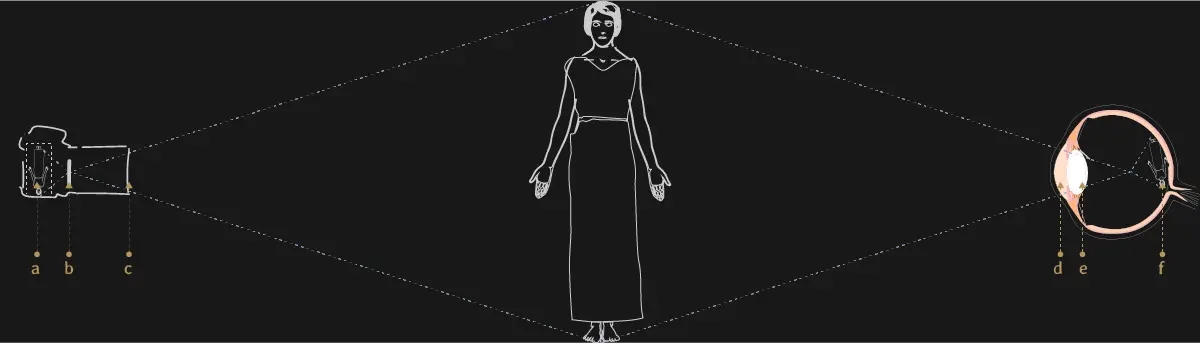
a. CCD/Film | b. Diaphragm | c. Lens
d. Iris/Pupil | e. Crystalline lens | f. Retina
Drawing from the Manual.
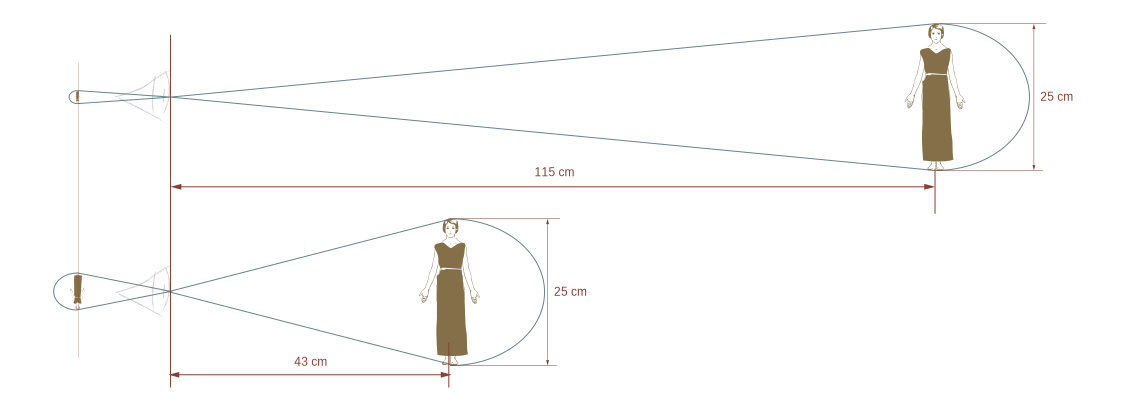
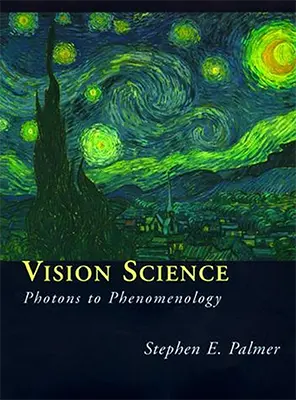
The resemblance, however, soon ends. The human eye takes in roughly 200° horizontally and 135° vertically, although only a small central area — the fovea — offers true sharpness.2 And the decisive difference lies not in the optics but in what comes afterwards: the camera merely records the projection as it is; the brain interprets and enriches — it corrects the orientation, combines what each eye sees and uses cues such as sharpness, shadows or colours to make us feel depth. Whoever wants the full scientific why has a reference book, and it is worth saying what it is for here: Vision Science: Photons to Phenomenology, by Stephen E. Palmer, shows that the rules of perspective used in a nativity scene are not a whim — they imitate the tricks that eye and brain use every day to estimate distance. Once this is understood, the nativity-scene maker does not copy a technique: they use it knowing which mechanism of perception they are addressing.3
And why does this matter in the nativity scene?
Because every scene that is built — large or small — will be perceived by the observer through these same mechanisms. Knowing how vision works makes it possible to decide better the scale, the angles and the colours with which distance is suggested. This subject is usually tackled without preamble, taking concepts for granted; leaving out these foundations only leads to misunderstandings — the bicycle has already shown where «I already know this» leads.
Two paths for building a nativity scene
Whoever starts building a nativity scene with sculptural figures has, in principle, two paths — and the reader of this block will recognise them: they are the two types of nativity scene from the chapter on framing, now seen from the standpoint of perspective.
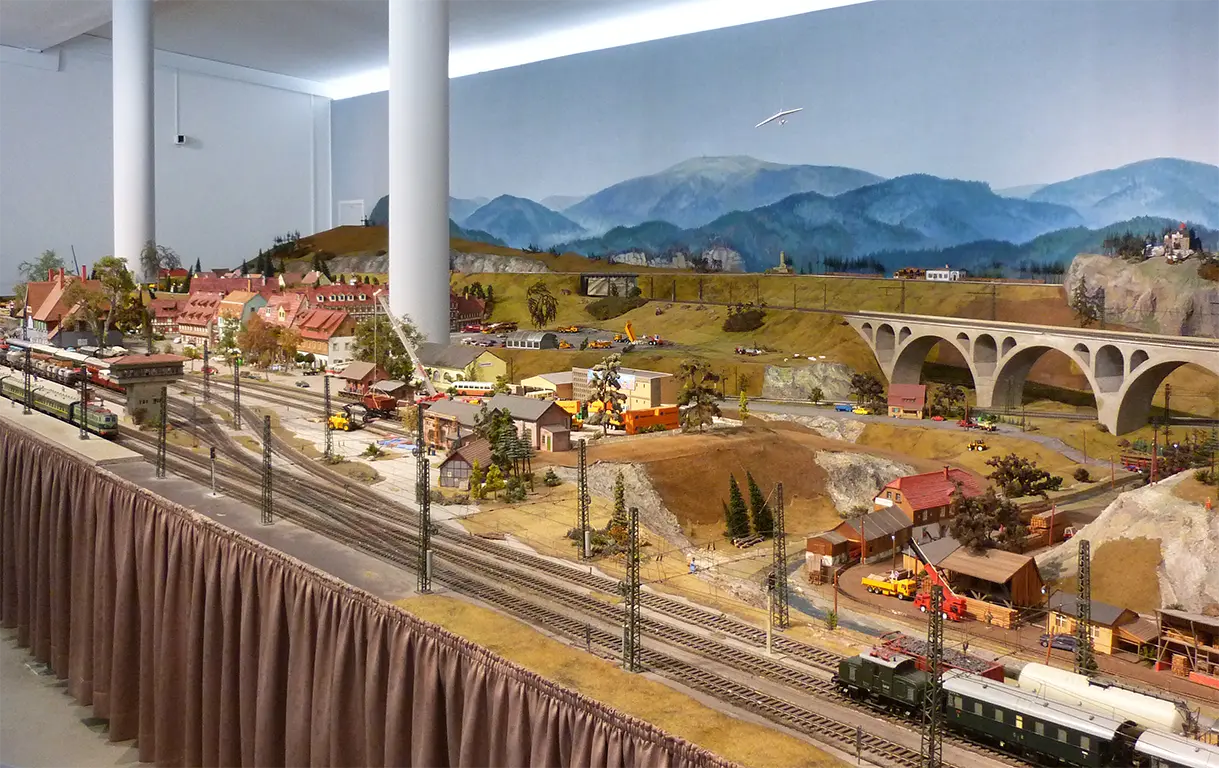
The first is simple: all the figures and elements at the same scale. The sense of depth comes solely from physical space, as in a model railway; there is no single viewpoint, and what is seen depends on how one walks round the whole. The result is a coherent nativity scene, with the freedom of the visual stroll — and with fewer means of directing the gaze. It is worth noticing something that is usually overlooked: even if nobody thinks about it, perspective is still present — one need only look at a model railway: the tracks, built at the same scale, converge and narrow as they recede. Perspective is not chosen; it is inherited with the eyes. What is chosen is whether to work with it or not.
The second path consists in playing with perspective: applying visual devices so that the space appears deeper than it is. Distant figures are made smaller, buildings are built in reduced proportions, colours fade towards the background — and from a main viewpoint, the spectator feels they are before a larger, more real world.
Now then: why is it not enough to copy the rules of technical drawing? Because those rules were created to represent reality on a flat surface, and the nativity scene is not flat: it is volumetric. Applying textbook linear perspective would require fixing a single viewpoint and, with 25 cm figures in the foreground, building an inordinately deep background — impossible within the limited volume of any nativity scene. Faced with that obstacle, the nativity-scene maker developed devices of their own: reducing scales, forcing angles, compressing distances, making an ally of atmosphere and colour. And out of that search came a decisive solution — framing the view from a single angle of observation: the diorama, whose history as a format was told in the chapter on framing and whose secrets will occupy a good part of this series.

At bottom, the question of the series is simple and at the same time deep: how does a group of figures, arranged within a few centimetres or a few metres, manage to turn before our eyes into a living, credible world? That is the function of perspective in the nativity scene. It must not be confused with the aim of the nativity scene itself, which is to tell a story; perspective is the servant of the story, never the other way round.
The last practitioners
Until recently, architects, draughtsmen and interior designers were required to know how to draw complicated perspective representations. Today software solves it instantly — any view, any light, the shadow at whatever hour is asked for. Manual construction survives as a training exercise in art schools and in drawing from life; but as a production tool — as a craft that builds real space — very few practitioners remain. The painter and the landscape draughtsman, when they work from life. And the nativity-scene maker, with a difference that sets them apart from all the others, including the theatre set designer, who is their closest relative. The set designer can make the scenery recede, but cannot shrink the actor: with an actor 1.70 m tall and seven metres of depth, the recession ends where the second actor stands, and behind there is room only for a painted backdrop. The nativity-scene maker subjects the figures too to that recession. For them perspective is neither an exercise nor a representation of something that will exist later; it is a necessary application for building the work itself.
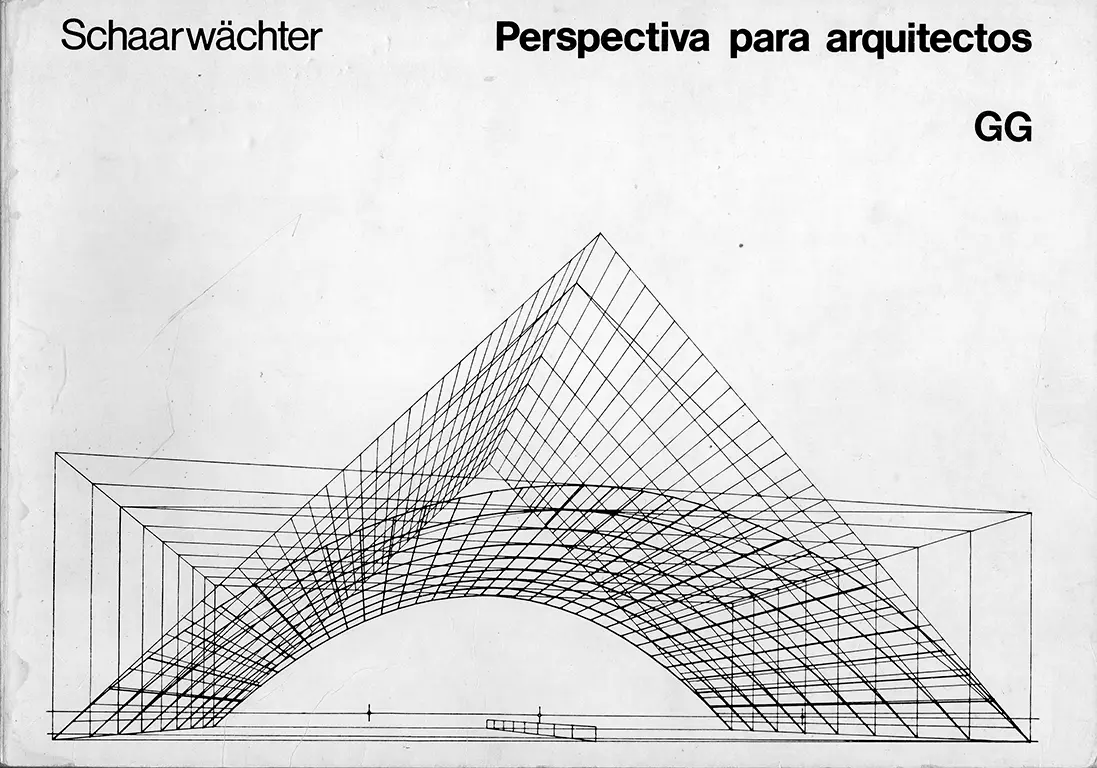
That difference has a name in this Manual, and it is worth planting it now because the history that follows will develop it: one thing is perspective as an instrument — the architect’s plan, the visualisation that shows the client what they cannot imagine — and another is perspective within a finished work, which serves nothing outside itself. The geometry is identical; what changes is the motive and the intention — the territory of the why and the what for (The why and the what for). The nativity-scene maker always works on the second side.
The rules, and what they are learned for
The most important thing remains to be said, and it is best said plainly: a good composition is more artistic than a good perspective. Perspective, in itself, has nothing artistic about it — it is descriptive geometry and technical drawing. It can be impeccably constructed and the scene remain mute; and if a nativity scene says nothing or moves no one, the effort of the construction will have been of little use.
Perspective enters this series as what it is: a means at the service of the effect — of the scene acting on whoever looks at it. And the three ways of failing each have their name: a passive scene asks nothing of the eye — it lets itself be seen, and that is the end of it; an inert scene has no life inside — nothing tightens, nothing is about to happen; an indolent scene — «que no se afecta o conmueve» (“that is not affected or moved”), says the dictionary of the Spanish language under indolente — neither feels nor makes anyone feel.4 Three ways for a scene to be dead, and all three are cured by the same thing: composing for the gaze.
What is the point of learning it, then?
The same as for all the rules in this block: to be able to choose. Whoever knows them can follow them, adapt them or break them knowing what they choose and at what price; whoever does not know them chooses too — blindly.
And there is a deeper reason for learning them, which is worth stating from the prologue: not everything in art has to be perfect. Imperfection can be a source of beauty — there is an aesthetic, Japanese Wabi-sabi, that made a doctrine of it, and this series will return to it — but on one condition that changes everything: that it be consciously assumed. The word is not there by chance: consciousness — conciencia in the Spanish original — is, says the dictionary of the Spanish language, «conocimiento claro y reflexivo de la realidad»5 (“clear and reflective knowledge of reality”). There lies the frontier this prologue needs to draw: the error of perspective committed unknowingly impoverishes the scene — it is the bicycle with the chain round both wheels; the licence taken knowing what is being left behind can enrich it — it is the loose brushstroke of someone who has mastered drawing. The two sometimes produce similar forms; what separates them is knowledge.
«Wabi-sabi for artists», CBC channel, from minute 2:00. Hosted on YouTube. To watch it, open the cookie settings and allow audiovisual content.
And the language keeps one last wink: among the synonyms of «conocimiento» (“knowledge”), the Spanish dictionary lists intuición5 — intuition — as if it too knew that well-digested knowledge ends up becoming an eye. That eye has a name in this Manual, and the reader should know it from now on, because it is the destination of the whole series: the eye of a good nativity-scene maker — modelled on the old Spanish expression a ojo de buen cubero, “by the eye of a good cooper”, that is, judging by eye: the intuition of the craft, knowledge turned into a way of looking, the eye that measures without a ruler because it has absorbed the system and takes liberties because it knows the rules. This series ends in it — and will devote a chapter to it. But to reach that freedom one must first know the rules: only then can they be broken with intention, and not out of mere ignorance.
And the rules have a history. Perspective was not born in the Renaissance: long before, Egypt, Greece and Rome had already tried out ways of representing depth, and after Brunelleschi the road went on — Leonardo’s aerial perspective, the optical gaze of Flanders, theatrical scenography, down to today’s software. Each age looked at space in its own way, and several of those ways hold keys that can be put to use in a nativity scene. That history — told with the eyes of a nativity-scene maker, not of an art handbook — is the stretch that begins in the next chapter: from the painted caves to the question of why, in 2026, the nativity-scene maker still stretches threads over a box.
References
The footnotes locate; they do not argue.
Lawson, R., «The science of cycology: Failures to understand how everyday objects work», Memory & Cognition, 34 (8), 2006, pp. 1667-1675 (DOI 10.3758/BF03195929). The concept of the «illusion of explanatory depth» comes from Rozenblit, L., and Keil, F., «The misunderstood limits of folk science: an illusion of explanatory depth», Cognitive Science, 26 (5), 2002, pp. 521-562 (DOI 10.1207/s15516709cog2605_1). ↩
Spector, R. H., «Visual Fields», in Walker, H. K., Hall, W. D., and Hurst, J. W. (eds.), Clinical Methods: The History, Physical, and Laboratory Examinations, 3rd ed., Butterworths, Boston, 1990, ch. 116: for one eye, 100° outwards, 60° inwards, 60° upwards and 75° downwards. ↩
Palmer, S. E., Vision Science: Photons to Phenomenology, The MIT Press (A Bradford Book), Cambridge (Mass.) and London, 1999; ISBN 0-262-16183-4. Ch. 5, «Perceiving Surfaces Oriented in Depth», section 5.5, «Pictorial Information», pp. 229 ff. ↩
Indolente, DLE (dle.rae.es), 24th ed., sense 2: «Que no se afecta o conmueve»; from Lat. indŏlens, -entis, 'insensible'. Accessed 28 November 2026. ↩
Conciencia, DLE (dle.rae.es), 24th ed., sense 4: «Conocimiento claro y reflexivo de la realidad»; conocimiento, DLE, sense 1, with intuición among the synonyms listed. Accessed 28 November 2026. ↩ ↩