
 ≈ 8 min
Every modelled figure is born of a way of looking.
Every scene created can bring us a little closer to the truth of what it seeks to represent.
When the nativity scene meets history
This manual is an artist’s notebook, a studio notebook and a notebook of sustained research: a living reflection on how the nativity scene can be thought of not only as custom or composition, but as the representation of a real narrative.
The aim is not to build a beautiful scene, but to give shape, with respect and coherence, to an event that has a concrete history behind it.
An important clarification before we begin
This study does not start from absolute certainties, nor does it seek to impose a single way of representing the nativity scene.
The search for historical and archaeological references does not seek to replace artistic tradition, but to enter into dialogue with it on a documented basis.
What is proposed here is a way of working with a finely tuned awareness: allowing devotion, aesthetics and study to meet without becoming confused.
The question that opens this path
How far can we come, with greater historical fidelity, to the visible and human world in which the birth of Jesus is set?
This block is born of that question.
A nativity scene can be more than a repeated custom. It can help us understand better the narrative it represents.
The usual practice has often been to inherit ready-made images. Beautiful, moving images, even valuable ones within a particular tradition, but not always conceived from the real world to which they claim to refer.
And there comes a moment when that is no longer enough. Not because tradition lacks value, but because a scene that seeks to represent a real narrative cannot rest solely on received formulas.
That is where the need to look again begins.
Why the inherited image is not enough
For centuries, the nativity scene has been one of the places where faith has become visible. But it is one thing to receive an artistic tradition, and quite another to confuse it with the historical reality of the birth of Jesus.
We often repeat a scene because we have always seen it that way. Not because we have asked ourselves where it comes from, which part arises from the text, which belongs to later tradition, or which elements truly correspond to the context of first-century Judaea.
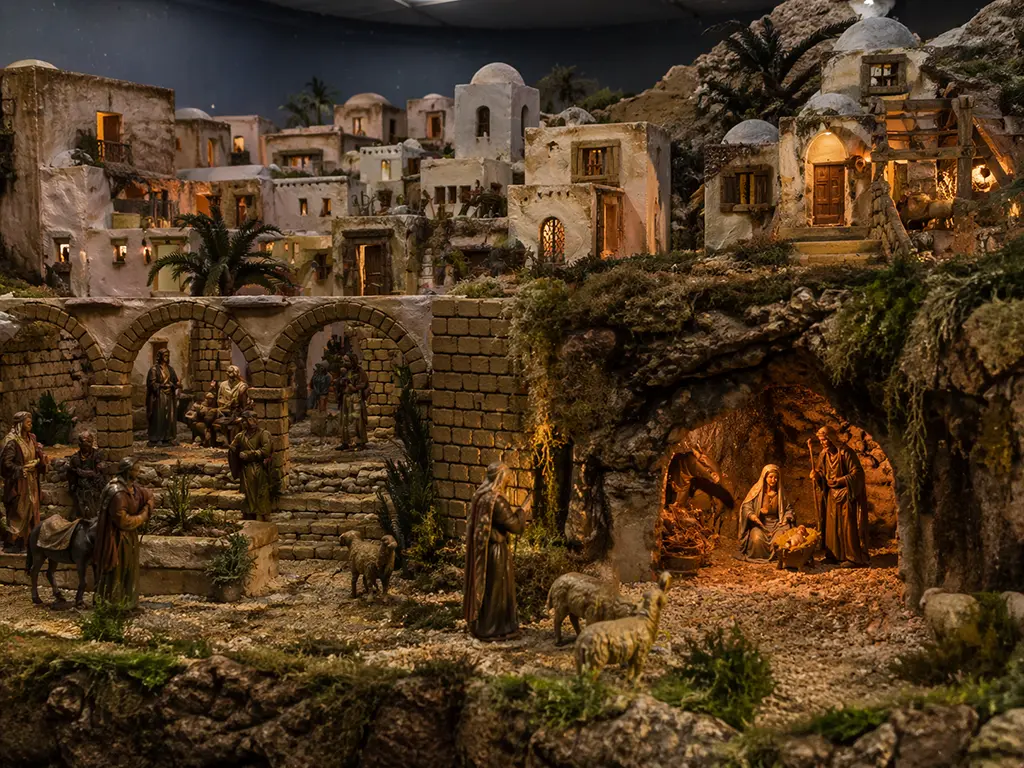
A repeated image is not always an understood image.
When that happens, the nativity scene may still move us, but it stops questioning what it represents. It becomes an inherited formula, not a conscious search.
And when a scene stops asking itself questions, it also begins to drift away from the world it claims to show.
What beginning to search means here
In this Manual of Nativity-Scene Art and Practice, speaking of a biblical nativity scene does not mean adopting an aesthetic fashion or dressing the scene in a vaguely oriental air. It means something more demanding: trying to approach the birth of Jesus while taking into account the world in which that narrative is set.
Not everything can be known with certainty, but today we know much more than it sometimes seems.
To search is not to want to resolve everything. It is to refuse to repeat without thinking. It is to return with closer attention to the narrative, to the context and to the material of the scene. It is to ask not only what we want to represent, but from where we represent it.
A work of representation, not of routine
This block is not born in order to accumulate data or to correct details out of erudite zeal. It is born of a conviction that, for me, has become ever clearer: the nativity scene can be thought about with more seriousness than it is often granted.
Not only as an endearing tradition or a Christmas practice, but as an artistic and cultural form capable of entering into dialogue with the narrative and with the material world in which that narrative is set.
That changes the position of the nativity-scene maker. It is no longer enough to place figures or put together a pleasant scene. We need to understand better what story we have in our hands, what human world sustains it, and which part of our way of looking arises from custom and which from genuine attention to what is represented.
What this block attempts
This work is not born to close a question, but to open it better. It does not seek to impose a single model, but to help ensure that each artistic decision arises not only from custom, but also from a real search.
Before deciding how a scene should look, it is worth asking what is being represented. Before repeating an image, it is worth knowing what it is made of. Before taking an inherited form as historical, it is worth distinguishing between tradition, interpretation and context.
That is the meaning of this path. Not to start from an image already closed, but from a way of looking that learns to ask itself questions.
Note
Throughout the Manual, expressions such as biblical nativity scene, biblical crib or biblical-style nativity scene will appear. In this context they are used to indicate one and the same general approach: representing the birth of Jesus with attention to the historical, cultural and human context in which the narrative is set.
And what if everything you took for granted were only the beginning?
This first step does not yet seek to resolve what makes a biblical nativity scene authentic. Its task comes earlier: to open up the ground and justify the search.
In the next chapter we shall try to define that initial question more precisely: what can give real coherence to a biblical nativity scene, and which elements it is worth bearing in mind so as not to confuse an inherited image with a considered representation.
References
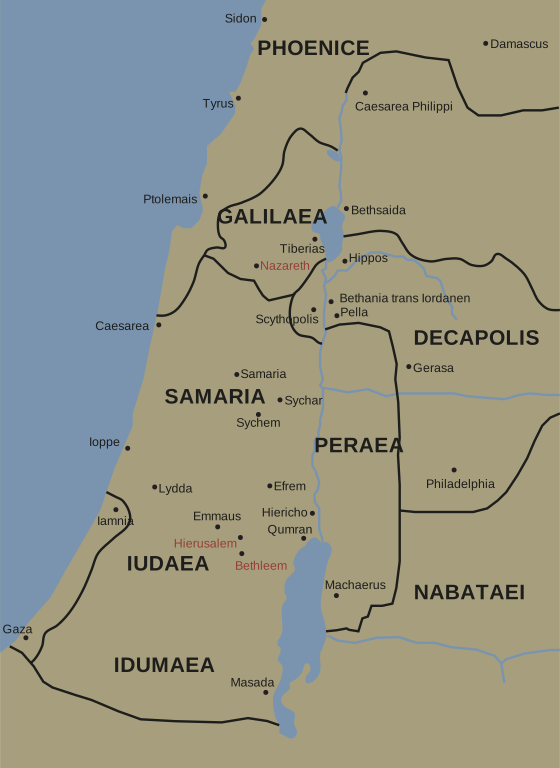
- ↑ [1] Judea (provincia romana). (n.d.). In Wikipedia. https://es.wikipedia.org/wiki/Judea_(provincia_romana). Map adapted for the Manual, with the names in Latin taken from the Vulgate and from Pliny the Elder, Naturalis historia V, 66-77. Qumran is a modern name: no ancient Latin form has been found.