
 ≈ 2 min

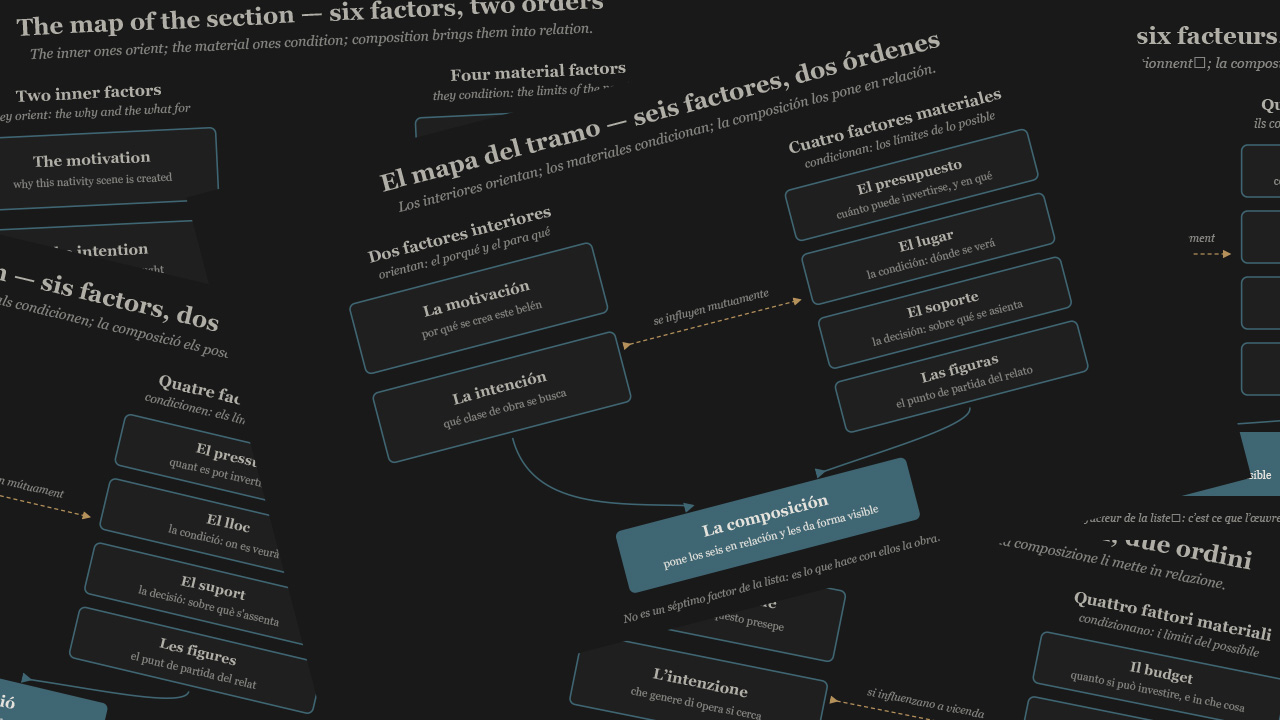
Whoever places a figure, looks at it and turns it a little is already composing; this chapter names that practice and presents its map.
Composition does not begin when the first figure is placed:
it begins earlier, in the why, the what for and the what with.
By the time the first figure is placed, decisions have already been taken, nearly always without knowing they were being taken. Six factors prepare the ground for any nativity scene, and they are not of the same order. Two are inner: the motivation — why it is created — and the intention — what kind of work is sought. Four are material: the budget, the place, the support and the figures. Composition is not a seventh factor on the list: it is what brings them all into relation.
Three chapters go through them in the order of the work. The first gives a name to a practice already being exercised and presents the map of the six factors; the second deals with the two inner ones; the third, with the four material ones. They speak to the two crafts that compose: the sculptor, who composes the figure, and the scenographer, who composes the scene.
Three articles · Two stages
The route gives composition its name and then follows the six factors that prepare it, from the inner ones to the material ones.
Composition receives its name and the map of the six factors orders the questions.
Whoever places a figure, looks at it and turns it a little is already composing; this chapter names that practice and presents its map.
The motivation and the intention orient; the budget, the place, the support and the figures mark the limits.
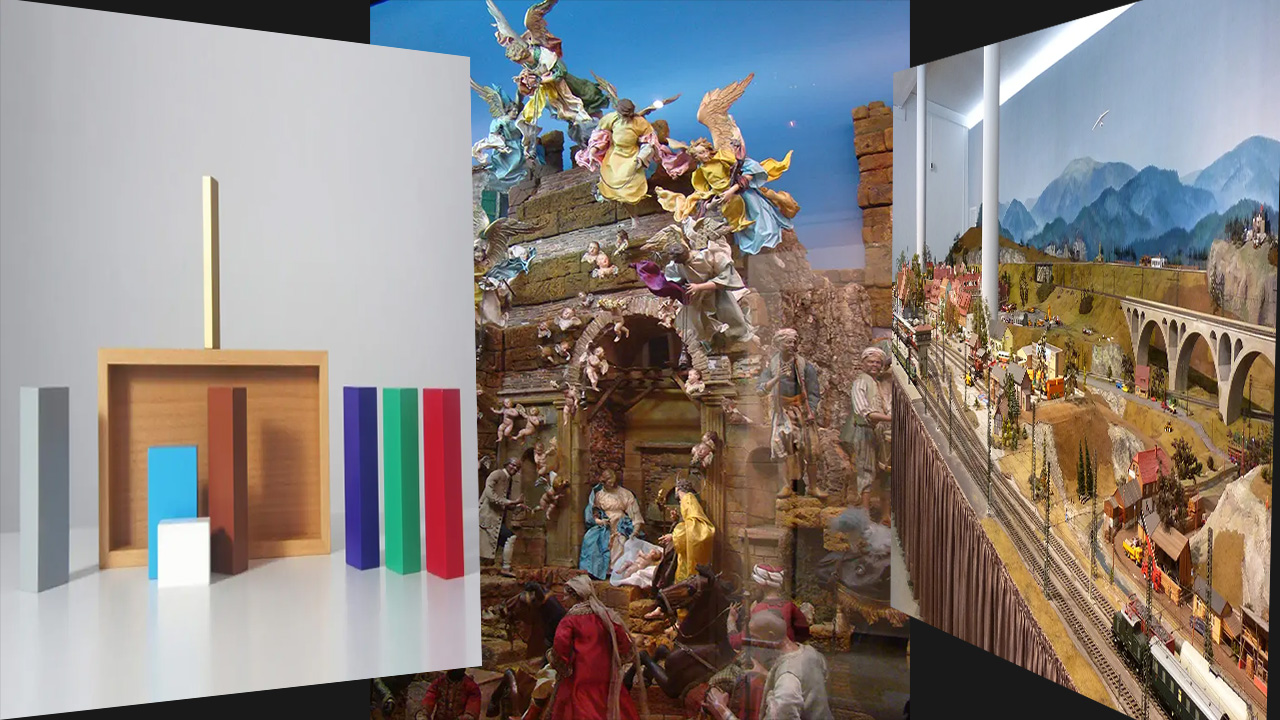
Before the first visible decision there are two invisible ones: why this nativity scene is created and what kind of work is sought.
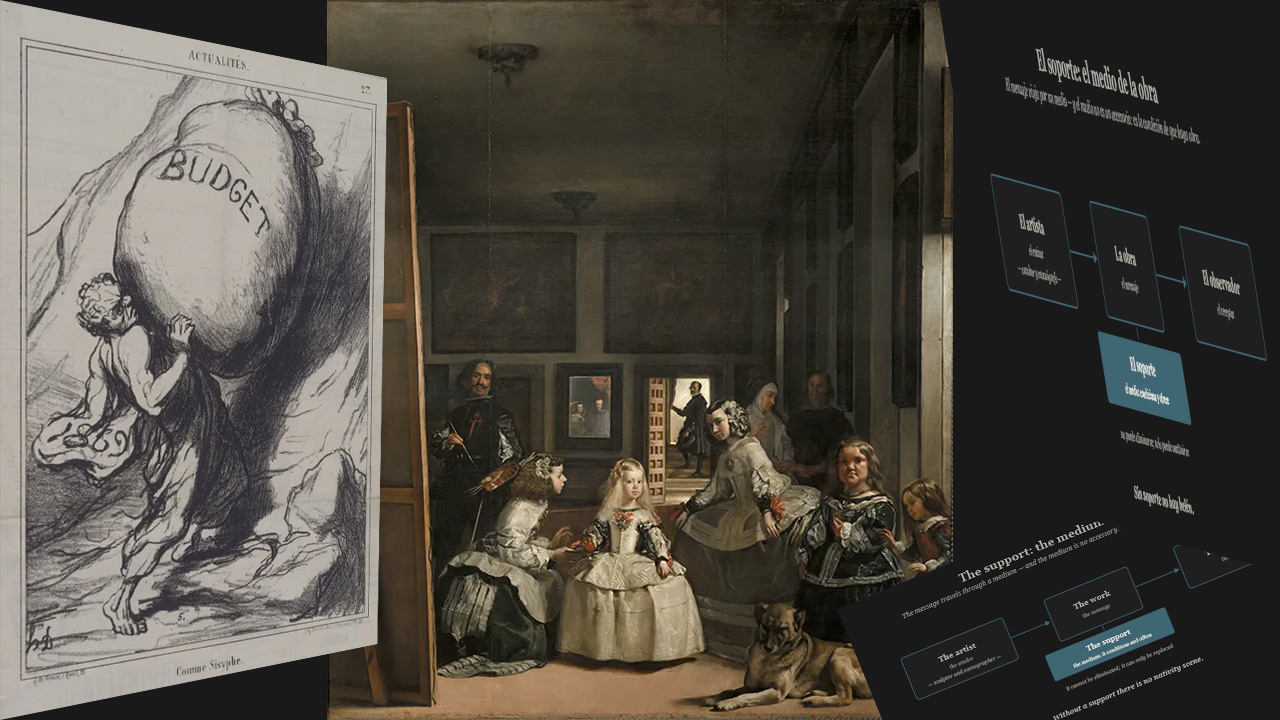
Budget, place, support and figures: the limits within which every composition takes place.
