Bibliography on art

Methods, composition and aesthetics

Last modified
Approximate reading time
≈ 3 min

In the world of nativity scenes, the vast majority of nativity-scene makers are self-taught. They build their nativity scenes guided by their taste, their experience and what they have learned through practice. Only a minority have gone through courses, associations or a broader artistic training.

Few, moreover, complement that practice with books that provide foundations in art, technique and composition. Not because it does not interest them, but because it is not always clear where to begin.

Without those references, creativity tends to move within a familiar repertoire, not for lack of talent, but for lack of new stimuli. Books on art can open doors: they provide visual vocabulary, technical knowledge and aesthetic foundations that help to turn practice into a more conscious production.

These books do not replace the experience of the workshop or the enthusiasm of tradition; they enrich them, giving them a firmer basis for understanding better the figures, the composition and the scenography of the nativity scene.

This section brings together books devoted to art in general: history, artistic techniques and methods, aesthetic theory and other disciplines that can help to place the nativity scene within universal art. It is not a definitive list, but an open bibliography that may grow with new contributions.

In the end, the question every nativity-scene maker can ask is a simple one: is there something more I want to be able to express with my nativity scene?


How the catalogue is presented

In most countries, these works can be requested through public libraries or interlibrary loan. They can also be searched for in WorldCat, the international bibliographic catalogue.

Documented catalogue

Bibliography

15 references available. Covers are shown when they form part of the documentary archive.

  1. Vinci, Lionardo

    Trattato della pittvra di Lionardo da Vinci

    nouamente dato in luce, con la vita dell'istesso autore, scritta da Rafaelle dv Fresne.

    Parigi, Appresso Giacomo Langlois · 1651

    PaintingScenographyArt historyPerspective ENFRDEITES

    Reading guidance for the Manual

    Very useful · specialised support

    It can serve as support for understanding observation, perspective, light and the representation of the figure within the tradition of painting treatises.
    Locate the work

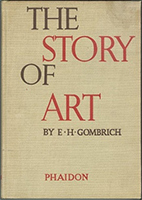
  2. Gombrich, Ernst Hans Josef

    The story of art

    London · Phaidon Press · 1950

    SculpturePaintingArchitectureArt historyPedagogy ENFRDEITES

    Reading guidance for the Manual

    Very useful · specialised support

    It can serve as general support for placing the nativity scene within a broad view of the history of art and of the evolution of visual forms.

    Locate the work

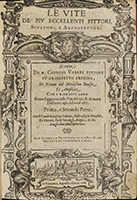
  3. Vasari, Giorgio

    Le vite de' più eccellenti pittori, scultori, e architettori

    da Cimabve in sino a? tempi nostri

    Firenze · Giunti · 1550

    SculpturePaintingArchitectureArt historyArtists’ biographies ENFRDEITES

    Reading guidance for the Manual

    Useful as a complement

    It can serve as support for placing the biographical and historical tradition of Italian art, especially in relation to painters, sculptors and architects of the Renaissance.

    Locate the work

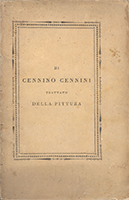
  4. Cennini, Cennino

    Trattato della pittura

    messo in luce la prima volta con annotazioni dal cavaliere Giuseppe Tambroni

    Roma · Paolo Salviucci · 1821

    SculpturePaintingArt historyMaterial culture ENFRDEITES

    Reading guidance for the Manual

    Very useful · specialised support

    It can serve as support for understanding techniques, materials and workshop procedures in the medieval and Renaissance painting tradition.

    Locate the work

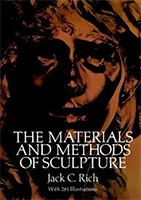
  5. Rich, Jack C

    The materials and methods of sculpture

    New York · Oxford University Press · 1947

    SculptureArt historyMaterial culture EN

    Reading guidance for the Manual

    Very useful · strong reference work for the Manual

    It can serve as a useful reference for understanding the materials, techniques and procedures proper to sculptural work.

    Locate the work

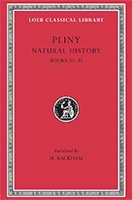
  6. Plinius Secundus, Caius

    Naturalis historia

    Volume IX: Books 33–35 (H. Rackham, Trad.)

    Cambridge, MA & London, UK · Harvard University Press · 1952

    SculpturePaintingArt historyArchaeologyMaterial culture ENFRDEITES

    Reading guidance for the Manual

    Very useful · specialised support

    It can serve as support for understanding materials, pigments, metals and ancient accounts of painting and sculpture in classical culture.

    Locate the work

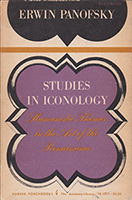
  7. Panofsky, Erwin

    Studies in Iconology

    Humanistic Themes in the Art of the Renaissance

    New York · Harper Torchbooks · 1962

    PaintingArt historyIconologyPhilosophy ENFRDEITES

    Reading guidance for the Manual

    Very useful · strong reference work for the Manual

    It can serve as a useful reference for understanding the interpretation of symbols, humanist themes and visual meanings in Renaissance art.

    Locate the work

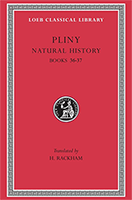
  8. Plinius Secundus, Caius

    Naturalis historia

    Volume X: Books 36–37 (D. E. Eichholz, Trad.)

    Cambridge, MA & London, UK · Harvard University Press · 1962

    SculptureArchitectureArt historyArchaeologyMaterial culture ENFRDEITES

    Reading guidance for the Manual

    Very useful · specialised support

    It can serve as support for understanding stones, marbles, gems and ancient accounts of sculpture, architecture and noble materials.

    Locate the work

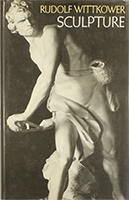
  9. Wittkower Rudolf

    Sculpture:

    Processes and Principles

    London · Allen Lane, Penguin Books Ltd · 1977

    SculptureArt historyPedagogyMaterial culture ENFRDEITES

    Reading guidance for the Manual

    Very useful · strong reference work for the Manual

    It can serve as a useful reference for understanding how working processes and methods shape the form and meaning of sculpture.

    Locate the work

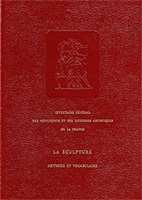
  10. Baudry, Marie-Thérèse

    LA SCULPTURE.

    Principe d'analyse scientifique, Méthode et vocabulaire

    Paris · La Documentation Française · 1984

    SculptureArt historyPedagogyMaterial cultureArchaeological heritage FR

    Reading guidance for the Manual

    Very useful · strong reference work for the Manual

    It can serve as a useful reference for describing with precision the forms, techniques, materials and vocabulary proper to sculpture.

    Locate the work

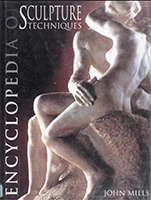
  11. Mills, John W.

    Encyclopedia of sculpture techniques

    London · Batsford · 1990

    SculptureArt historyPedagogyMaterial culture EN

    Reading guidance for the Manual

    Very useful · strong reference work for the Manual

    It can serve as a useful reference for consulting the techniques, materials, tools and procedures proper to sculptural work.

    Locate the work

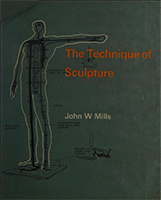
  12. Mills, John W.

    The technique of sculpture

    London · Batsford · 1990

    SculpturePedagogyMaterial culture EN

    Reading guidance for the Manual

    Very useful · specialised support

    It can serve as support for understanding the casting and reproduction procedures applied to sculptural work.

    Locate the work

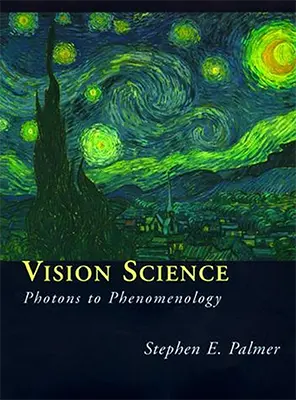
  13. Palmer, Stephen E., Linda A.

    Vision science

    : Photons to Phenomenology

    Cambridge, Massachusetts, · MIT Press · 1999

    SculpturePerspectivePhilosophyPedagogyPsychology EN

    Reading guidance for the Manual

    Useful as a complement

    It can serve as support for understanding visual perception, form, colour, depth and the experience of the image.

    Locate the work

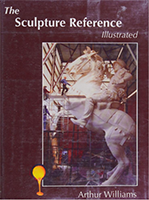
  14. Williams, Arthur

    The Sculpture Reference Illustrated

    contemporary techniques, terms, tools, materials, and sculpture

    Mississippi · Sculpture Books, Gulfport, MS, cop. · 2005

    SculptureArt historyPedagogyMaterial culture EN

    Reading guidance for the Manual

    Very useful · strong reference work for the Manual

    It can serve as a useful reference for consulting the techniques, terms, tools and materials proper to contemporary sculpture.

    Locate the work

  15. LAWSON, Rebecca

    The science of cycology

    Failures to understand how everyday objects work

    Psychonomic Society · 2006

    Psychology

    Reading guidance for the Manual

    Very useful · specialised support

    It provides experimental evidence that visual familiarity does not guarantee a correct structural or functional understanding: many people draw a bicycle from memory with serious errors in the frame, the pedals or the chain. It is relevant to the Manual because it grounds the need to observe, analyse and understand an object before representing it in sculpture or painting.

    Locate the work